Pelvic Floor Physical Therapy in Redlands
Leaking when you sneeze. Pain with sex. Pressure that arrived with a pregnancy and never left. A bladder that decides where you sit in a restaurant. You have probably been told this is just what happens now. It is a muscle problem with a mechanical cause, and it is treatable in an outpatient clinic in Redlands by a pelvic floor certified doctor of physical therapy.
What Pelvic Floor Physical Therapy in Redlands Involves
The pelvic floor is a sling of muscle across the base of the pelvis. It supports the bladder and bowel, it has to relax fully to let you empty and contract on demand to keep you continent, and it absorbs load every time you cough, lift a toddler or land off a run. It is skeletal muscle, which means it can be too weak, too tight, or simply badly timed, and it responds to training and manual work the way any other muscle does. What it cannot do is fix itself while you avoid the movements that provoke it. The symptoms it produces when it is failing are leaking, urgency, straining, constipation, pain with penetration, tailbone pain, and a heaviness that feels like something is on its way down.
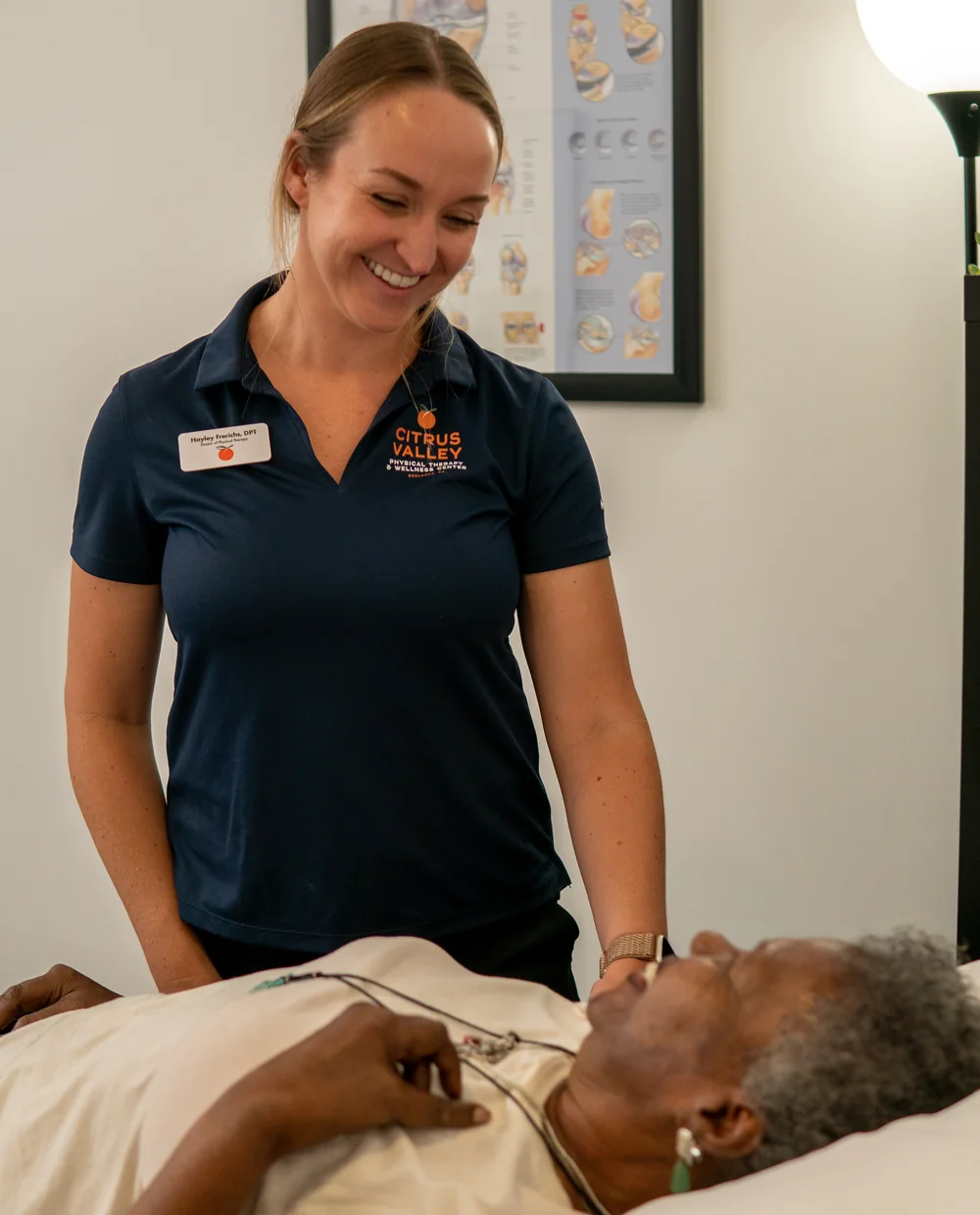
In Redlands that care is delivered one on one by Dr. Hayley Park, DPT, who is certified in pelvic floor physical therapy and has more than two years of pelvic floor experience. Sessions run 30 to 60 minutes, the first visit is about an hour, and this is not a room where you are handed a sheet of kegels and left to it. Nothing is examined that you have not agreed to first. If an internal assessment would genuinely add information, it is explained in full before it is offered, the decision is yours, and a great deal can be assessed and treated without one.
Who Books This Appointment
Not only women, and not only after childbirth. Most people who come in for pelvic floor work in Redlands arrive with one of three sets of symptoms, and often more than one at once.
Pregnant Or Postpartum
Pelvic pressure and back or hip pain during pregnancy, then the part nobody prepares you for afterwards: leaking, heaviness, abdominal separation, scar tissue from a caesarean or a tear, and the question of when it is actually safe to run, lift or return to the gym. Six weeks and a wave from a clinician is not a rehabilitation plan. See pre and post partum care.
Bladder And Bowel Symptoms
Leaking with a cough, a sneeze, a laugh or a jump. Urgency that has you mapping bathrooms before you leave the house. Constipation, straining, or the sense that you never fully empty. Symptoms tangled up with IBS. These are far more often coordination and muscle tone problems than people are told. See bladder and bowel dysfunction.
Pelvic Pain
Pain with sex, tailbone pain, pain that sits deep in the hip or groin, pain that arrived after pelvic or abdominal surgery, and pain that has been imaged and worked up repeatedly and come back as nothing structural. Muscle and nerve irritation can generate every one of those. Being told the scan is clear is not the same as being told what is wrong. See pelvic pain.
What Your First Visit Is Like
About an hour, one on one, behind a closed door. Here is exactly what happens and in what order, because the not knowing is the part that keeps people from calling.
You Talk First, Fully Clothed
The visit opens with a conversation, not an examination. Your symptoms and how long they have been there, pregnancies and deliveries, surgeries, bladder and bowel habits, what makes it worse, and what you have already tried and been told. Nothing is looked at until you have said everything you came in to say, including the part you rehearsed in the car.
The Assessment, On Your Terms
A doctor of physical therapy assesses your breathing, ribs, hips, abdominal wall and low back, because the pelvic floor almost never fails on its own. If an internal assessment would add something the external exam cannot, it is described first and consent is asked for, and no is a complete answer with no consequences for your care. Useful treatment happens either way.
Findings, Then A Plan
You leave with what was found, in plain words, and a plan of care. Most plans run 2 to 3 visits a week for 4 to 6 weeks, with home work measured in minutes rather than hours. Your therapist re-tests your measurements at every visit, so whether the plan is working is something you can see rather than something you hope about.
You do not need a referral to start in most cases. California direct access lets you begin physical therapy without a physician referral for up to 45 days or 12 visits, whichever comes first. Some insurance plans still require one for coverage, so call or text (909) 353-7053 and we will check your specific plan and verify your benefits before your first visit. We are contracted with Aetna, Anthem Blue Cross, ASH, Blue Shield of California, Health Net, Kaiser Permanente, Loma Linda Managed Care, Medicare, Optum/UHC, TriCare and TriWest. If you would rather ask questions before booking an evaluation, talk to a specialist first.
I have been very pleased with Citrus Valley Physical Therapy, Haley is very professional, knowledgeable and great to work with! Thank you.
Where to Go Next

Pelvic Floor Therapy
The clinical explainer. How the pelvic floor is assessed, what treatment involves session to session, and how a plan of care progresses.
Pelvic Pain
Pain with sex, tailbone pain, deep hip and groin pain. What generates it when the imaging comes back clear, and what changes it.
Bladder & Bowel Dysfunction
Leaking, urgency, constipation and incomplete emptying, treated as the muscle timing and coordination problems they usually turn out to be.
Ready when you are.
All fields are required.