Hip & Knee Pain Treatment in Redlands
You take the stairs one at a time now, and you think about the getting up before you sit down. Hips and knees that hurt on a schedule are a mechanics problem, and mechanics can be changed.
What causes hip and knee pain?
You have started planning around it. Aisle seat, ground floor, the shorter loop at the park. You are not being dramatic, and you are not old before your time. The knee sits between the hip and the foot and has almost no ability to choose its own path, so when the hip is not controlling rotation or the ankle is not bending, the knee absorbs the difference. That is why an X ray of a painful knee often looks like everyone else's, and why the fix usually starts somewhere other than where it hurts.
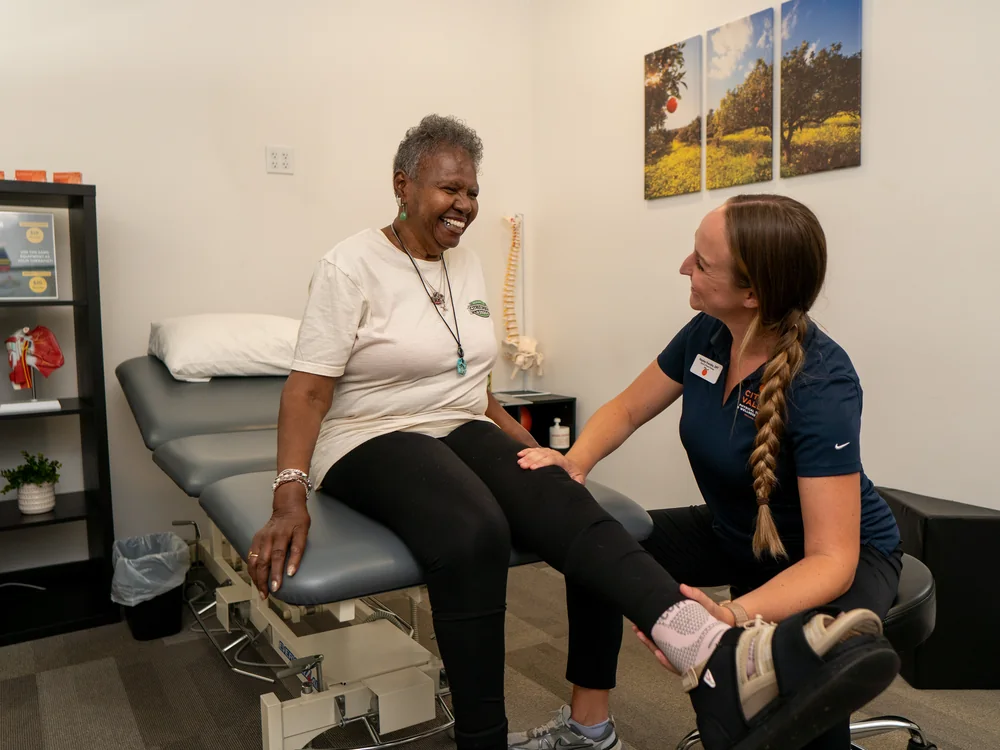
The kneecap glides in a groove at the end of the thigh bone, and it only tracks well if the hip holds the leg straight underneath it. When the glutes fatigue, the thigh rolls in, the groove moves out from under the kneecap, and the surface behind it gets irritated by ordinary stairs and squats. This is why the knee hurts but the hip is the thing that needs training.
Pain on the point of the hip that flares when you lie on that side or cross your legs is usually the gluteal tendons being compressed against the bone, not a hip joint problem. Stretching it feels productive and often makes it worse, because the stretch is the compression. Loading the tendon in the right position calms it, which is the opposite of what most people try first.
Cartilage change on an image is common and does not decide how much pain you will have. What reliably predicts function is quadriceps and hip strength, joint range, and how much you keep moving. Loading an arthritic knee deliberately and in a controlled way is one of the most evidence backed things in this field, and many patients get their walking distance back without surgery.
The meniscus is the shock absorber between the thigh and shin bones. Degenerative tears are common with age and frequently show up in people who feel nothing at all, so a tear on a report is not automatically the source of your pain. Symptoms often settle with load management and strengthening. Locking, giving way, or a knee that cannot straighten is a different conversation, and we will tell you so.
A hip that has lost rotation or extension forces the knee and low back to make up the difference on every step. People often notice the hip only as tightness, never as pain, while the knee does the complaining. Restoring hip motion frequently changes knee symptoms in a couple of weeks, which surprises patients who assumed the knee was the whole story.
Six weeks off after an illness, a surgery, or a busy stretch at work costs real muscle around the hip and knee. When you return at your old intensity, the joint takes load the muscle used to absorb, and it lets you know within a few days. The fix is not rest. It is a graded ramp back, which is most of what a plan of care actually is.
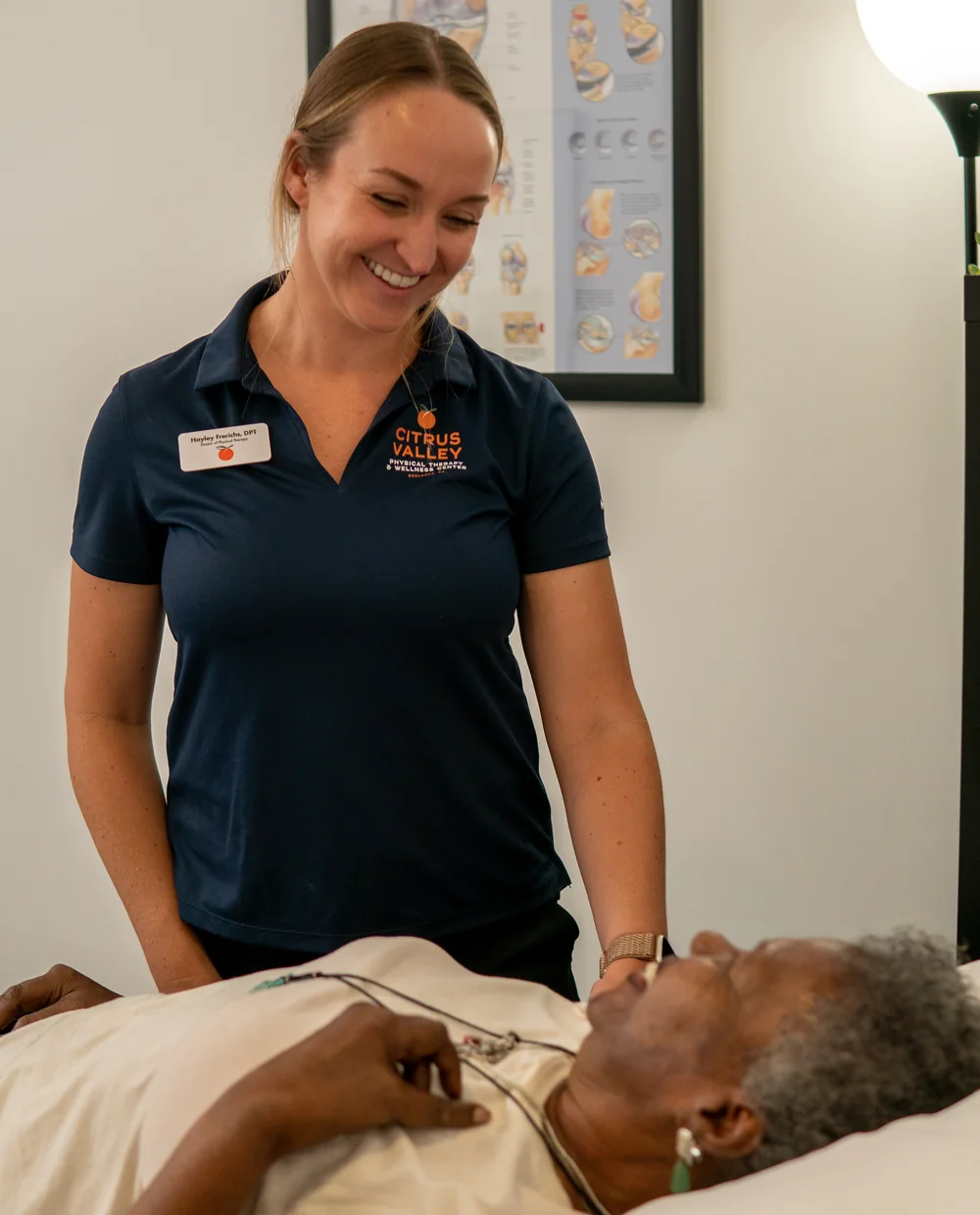
How physical therapy in Redlands helps.
The first visit is about an hour, one on one with a doctor of physical therapy, and most of it is testing rather than treatment. We measure hip and knee range, quad and glute strength, single leg control, and what your knee does when you actually step down off a box. Then the plan follows four phases: Pain to settle the joint enough that you can be assessed and move, Prime to restore the range the hip or knee gave up, Perform to load it until it holds under stairs, hills, and whatever sport or work you want back, and Prevent so the same pattern does not rebuild itself. Sessions run 30 to 60 minutes and most plans of care run 2 to 3 visits a week for 4 to 6 weeks. You will not be handed a sheet of exercises and left in a corner.
What to expect from your recovery.
The evaluation
A doctor of physical therapy takes your history, then tests: hip and knee range, quad and glute strength, and how the leg behaves on a single leg squat or a step down. We compare left to right and write the numbers down so there is a baseline to beat. You leave knowing which link in the chain is failing and whether physical therapy is the right call for it.
Calming the joint and restoring range
Early sessions combine hands on work through the hip, thigh, and calf with movement that the joint tolerates that day. Swelling and guarding come down first, because a joint that is braced cannot be strengthened. You will have a small home program, and your therapist re-tests your measurements at every visit so you know whether it is moving.
Building capacity for real life
This is where the results hold. We load the hip and knee through squats, step downs, hinges, and single leg work, progressed on purpose rather than by feel, and we rehearse the specific thing you want back: stairs, a shift on your feet, a hike, a return to running. Many patients notice a change in the first week or two, and the strength built here is what makes it last.
Doctor Nick is very knowledgeable and very thorough! He helped me work through a torn rotator cuff, and a hip that had lost alot of motion, and was very painful.
Pain rarely travels alone.
Back Pain & Sciatica
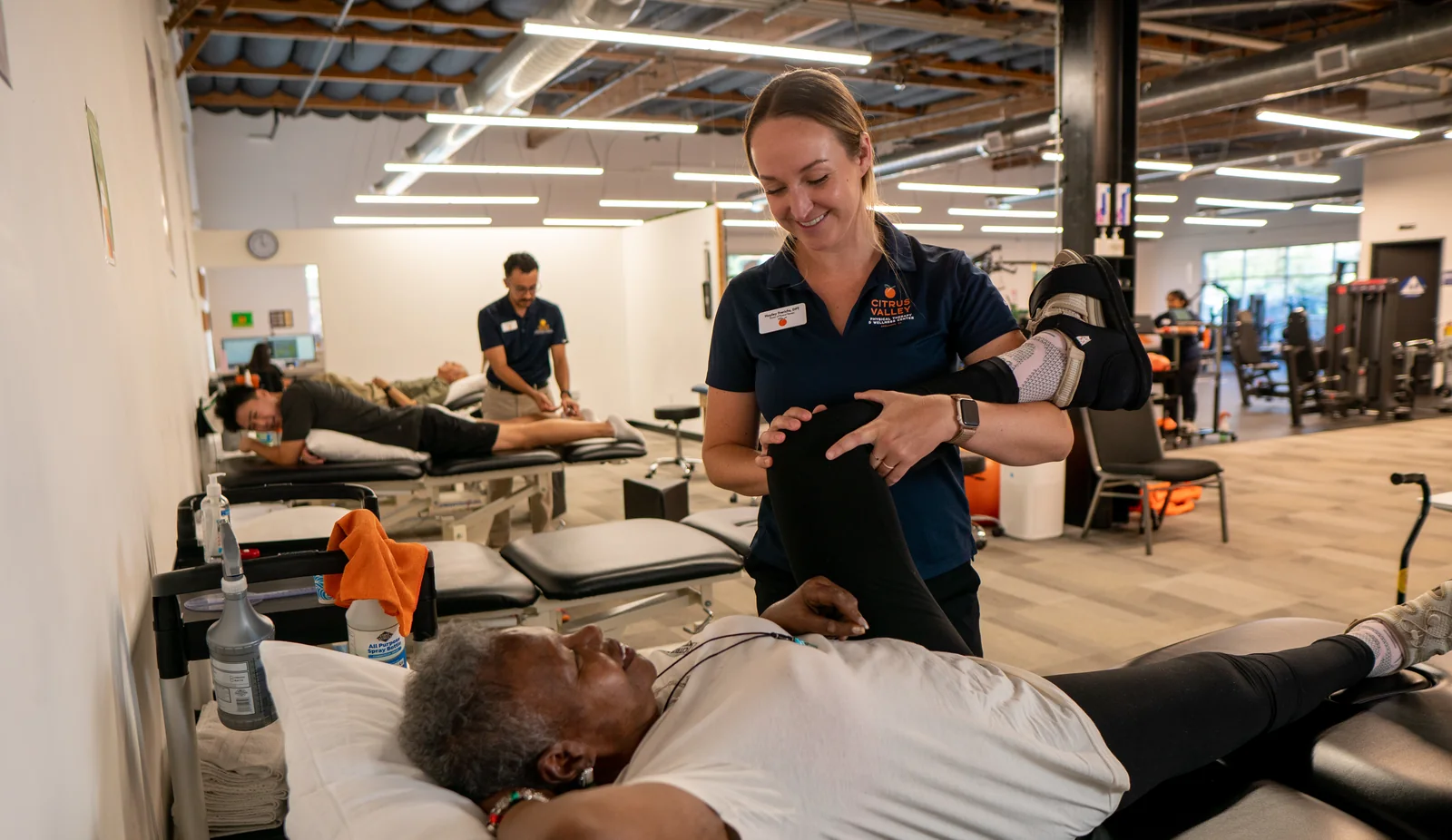
The hips and lower back work together. Hip weakness often drives lower back pain and sciatica.
Foot & Ankle Pain
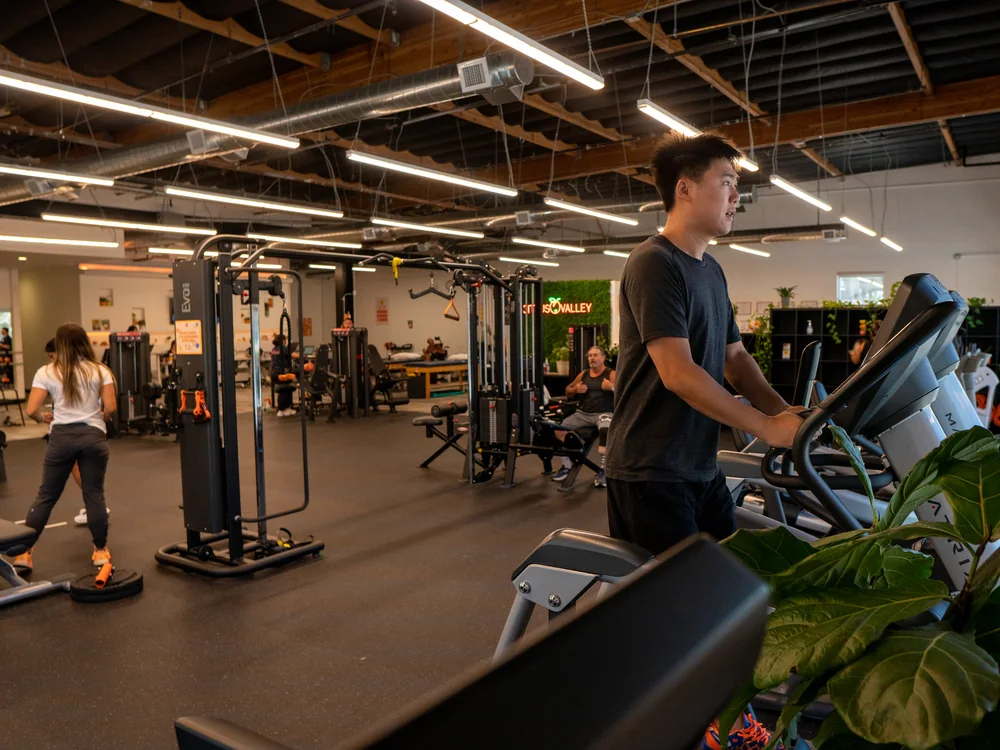
A weak or stiff foot changes how you walk, which puts stress on the knee and hip. Treating the foot stops cascade pain.
Arthritis
Arthritis in the hips and knees is manageable when the muscles around the joint are strong.
Ready when you are.
All fields are required.