Neck Pain Treatment in Redlands
You have stopped turning your head to check your blind spot. You turn your whole body instead, and you have been doing it so long you barely notice. Neck pain rarely starts in the neck. It starts with what the neck has been compensating for.
What Causes Neck Pain?
Usually there was no single moment. No fall, no accident, nothing you can point at, just a slow narrowing of what your neck is willing to do, until one morning it locks and you cannot back the car out of the driveway. Your neck holds up a heavy head on seven small, highly mobile vertebrae, all day, while your shoulder blades, mid back and breathing pattern either help or do not. When the parts below stop contributing, the neck absorbs the difference. That is why the tight muscles at the top are almost never the thing that actually needs fixing.
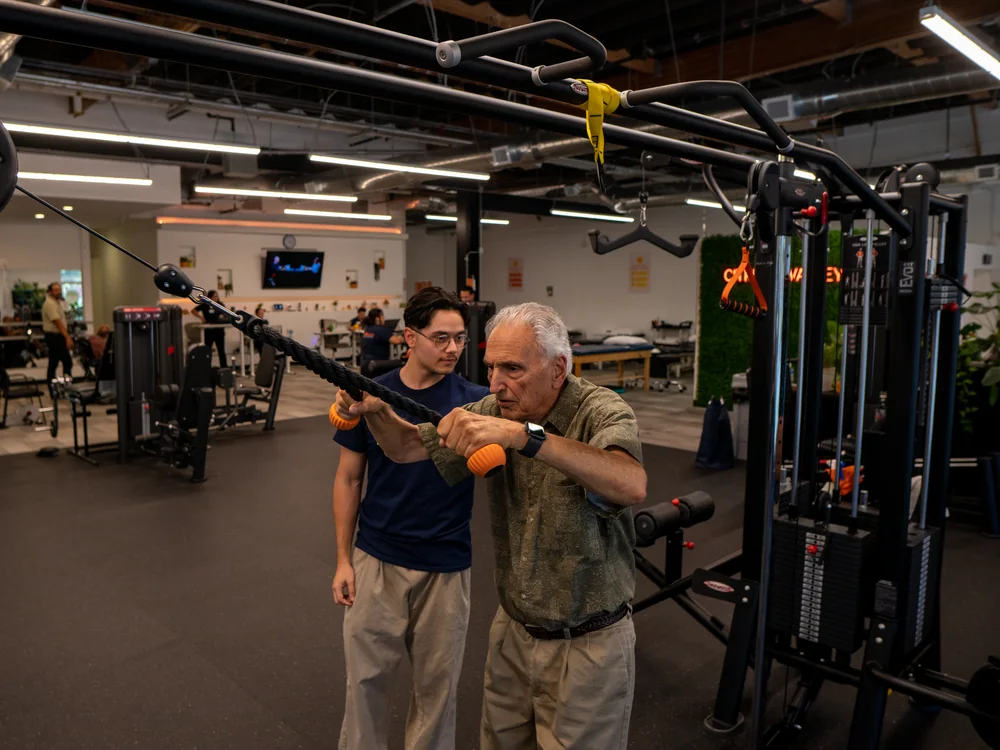
Underneath the big surface muscles sit small stabilizers that hold your head in position without any conscious effort. They fatigue quickly once your head sits forward of your shoulders, and when they quit, the upper trapezius and levator scapulae take the job on. Those are movers, not holders, so they stay switched on all day and turn into tender ropes. Strength testing usually looks fine. Endurance testing is where the failure shows up.
The small paired joints at the back of each vertebra guide rotation and side bending. When one gets compressed or held at end range, it produces a sharp, well localized pain on one side and a hard stop when you turn that way. It classically shows up on waking, because a night in an awkward position is exactly the kind of sustained end range load these joints object to.
When a cervical disc bulges toward a nerve root, the complaint stops being neck pain and becomes arm pain: a line of ache, pins and needles, or weakness running into the shoulder, forearm or specific fingers. Movements that close the space down, looking up or tipping toward the sore side, usually make it worse. This one needs a proper neurological screen rather than more stretching, and that screen is part of the evaluation.
Your shoulder blades are meant to carry your arms. If the muscles anchoring them to your rib cage are weak, that load travels upward and the muscles running from your neck to your shoulder tip end up holding your arms all day. People feel it as burning between the shoulder blade and the spine that worsens the longer they work. It is a strength problem presenting as a neck problem.
After a rear end collision or a hard fall, tissue heals on a normal timeline but the protective muscle guarding and the loss of trust in head movement often do not. Months later the neck moves in a small, careful arc that has become habit rather than necessity. Graded exposure to movement, run alongside strength work, is what unwinds it.
The upper three segments of the cervical spine share a pain pathway with the nerve that supplies your face and scalp, so irritation there gets felt as a headache: usually one sided, starting at the base of the skull and wrapping toward the eye. If your headaches track with neck stiffness and with how long you have been at a desk, the neck is a likely driver. There is more on that pattern on our headaches page.

How Physical Therapy in Redlands Helps
The first job is working out which of those structures is actually producing your symptoms, because the treatment for a stiff facet joint and the treatment for an irritated nerve root are not the same and one can aggravate the other. A doctor of physical therapy screens the neurological picture, tests the segments one at a time and checks your shoulder blade mechanics. From there it is hands on work to give the motion back, endurance training for the deep stabilizers, and strength through the mid back so the top of your neck can stop doing a job it was never given. Sessions are one on one and run 30 to 60 minutes.
What to Expect When You Start
The evaluation
Your first visit runs about an hour, one on one with a doctor of physical therapy. You will get asked when it started, what makes it flare, whether anything travels into the arm, and what your working day physically looks like. Then the exam: segment by segment mobility testing, deep neck flexor endurance, shoulder blade control, a neurological screen if there are arm symptoms, and a look at your desk and sleeping positions. In California you can start without a physician referral for up to 45 days or 12 visits, whichever comes first.
Your plan, in four phases
Every plan here moves through Pain, Prime, Perform, Prevent. Pain settles the irritated tissue enough that you can move and be assessed properly, usually with hands on work and a change to what you are doing between visits. Prime restores rotation and extension you have lost. Perform builds real endurance in the deep stabilizers and real strength through the mid back. Prevent is the short daily program that stops the same pattern rebuilding.
Measured, not guessed at
Most plans of care run 2 to 3 visits a week for 4 to 6 weeks, and many patients notice a change in the first week or two. Your therapist re-tests rotation range, endurance holds and your symptom pattern at every visit, so progress is measured rather than guessed at. We verify your insurance benefits and explain what you will owe before you commit to a course of care.
Brent Wild is Amazing! He is compassionate and very knowledgeable. He explains everything in great detail and takes his time with you. I felt so much better after my treatment!
Other Conditions We Treat in Redlands
Headaches
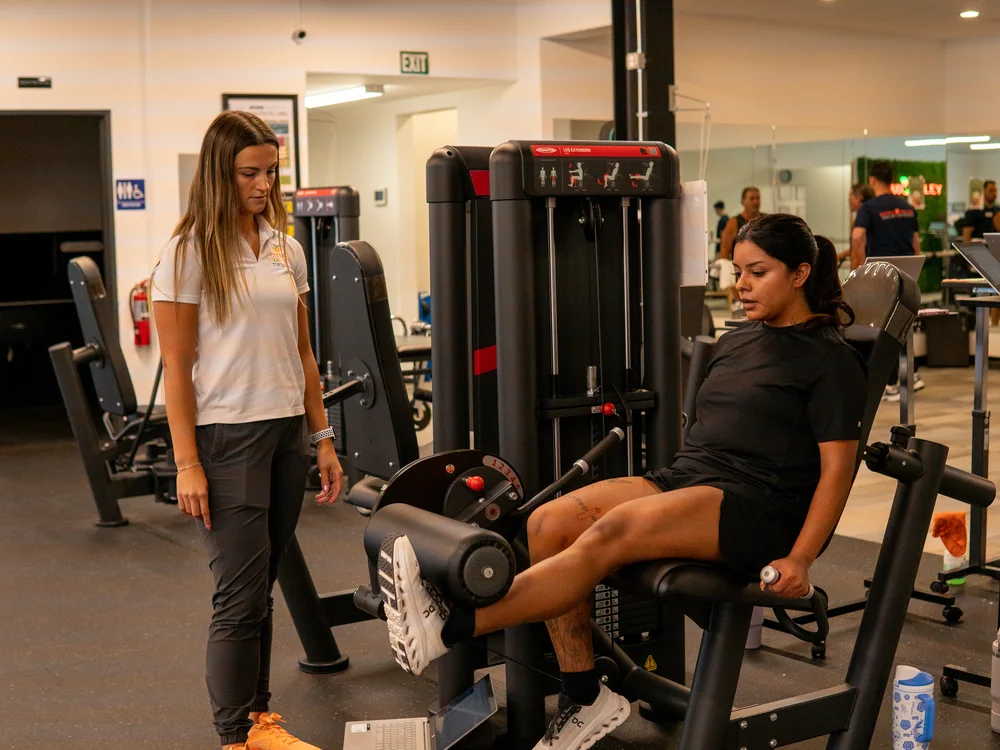
One sided, starts at the base of the skull, worse the longer you sit. That is a neck pattern wearing a headache costume.
Myofascial Pain
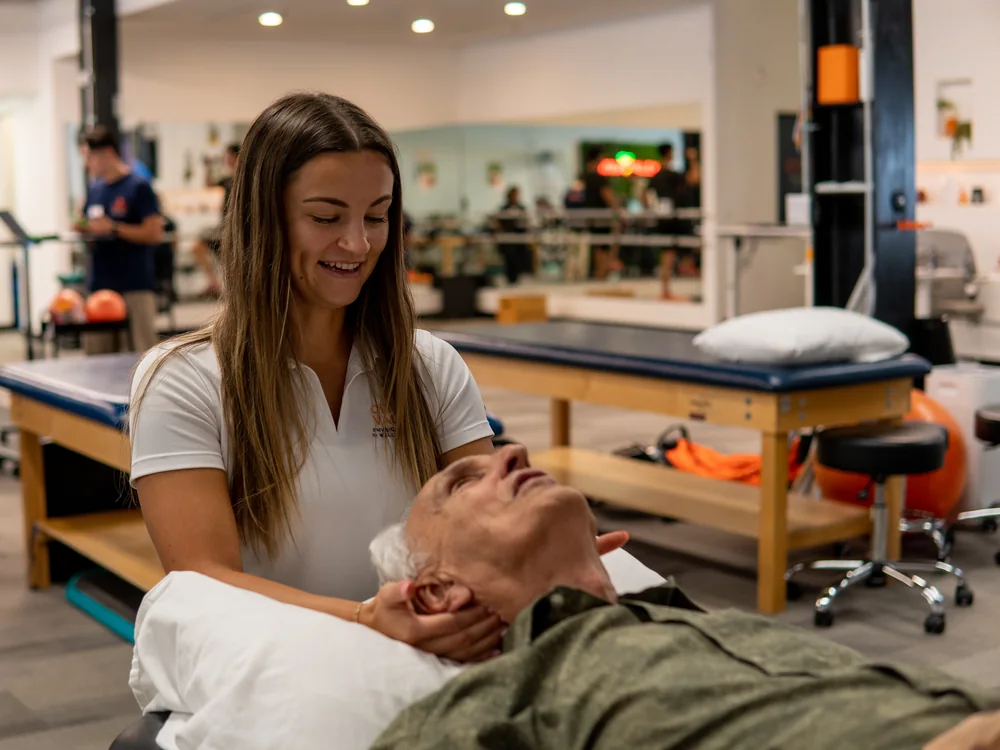
The tender knots along the top of the shoulder, why they refer, and why releasing them alone does not hold.
Shoulder Pain
Neck and shoulder share muscles and share blame. Sorting out which one is driving it is the whole job.
Ready when you are.
All fields are required.