Neurological Rehab in Redlands
Balance, walking and control are trained skills. After a neurological event, they can be trained again.
What is Neurological Rehab?
The stairs at home have become the thing you plan your day around. Maybe your foot catches on the carpet and you have started watching the floor instead of looking where you are going. Maybe your right hand does what you ask, slowly, and only while you watch it. What you are describing usually is not weakness in the ordinary sense. After a stroke, a brain injury, or with a condition such as Parkinson's or multiple sclerosis, the muscle itself is often intact. What changed is the signal. The pathway between the brain and the muscle is damaged, slowed, or noisy, so movement that used to be automatic now demands your full attention, and everything takes longer because of it. Neurological rehab is physical therapy aimed at that signal. It works with the nervous system's capacity to reorganize, which clinicians call neuroplasticity, by supplying the specific, repeated, genuinely challenging practice that drives change.
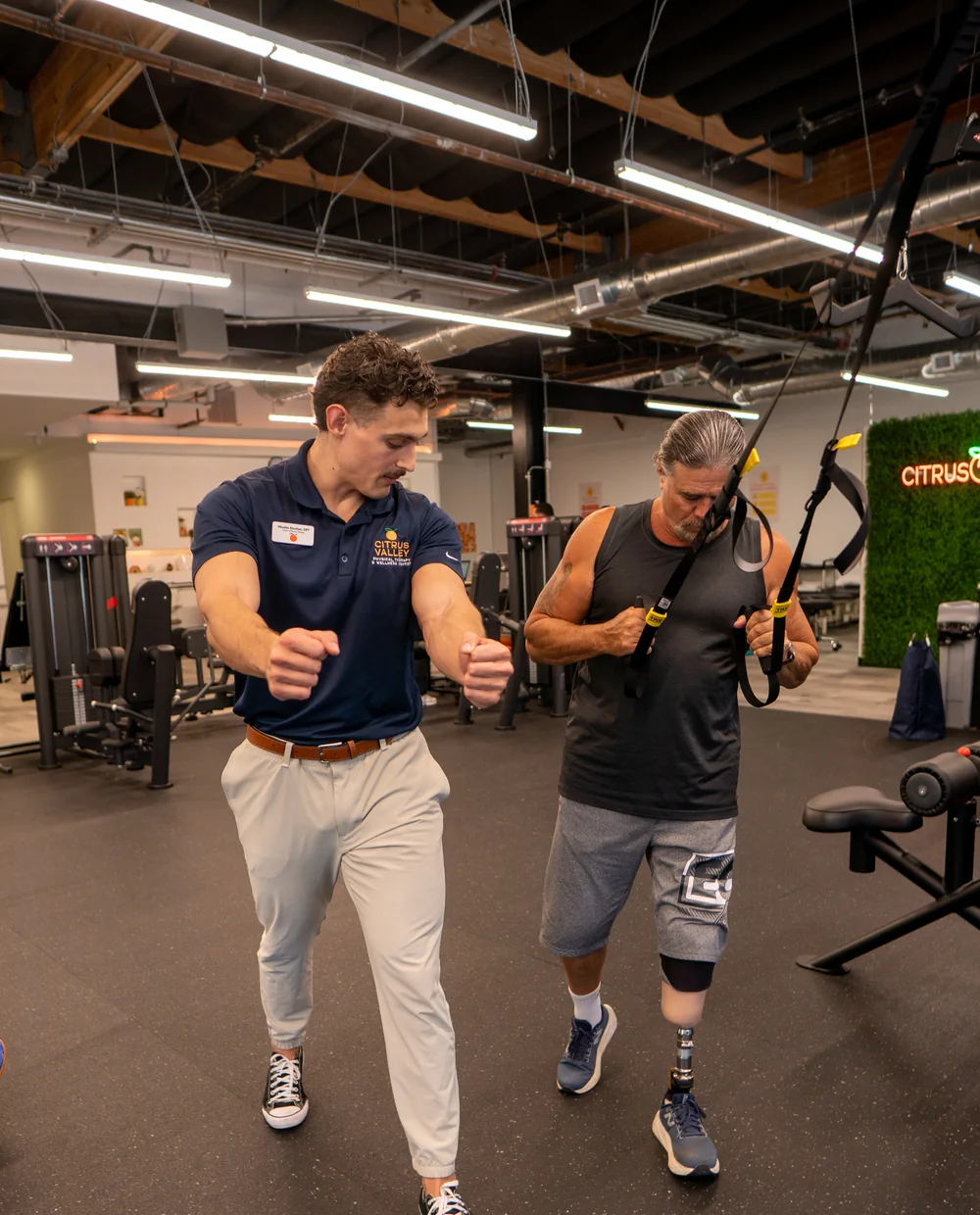
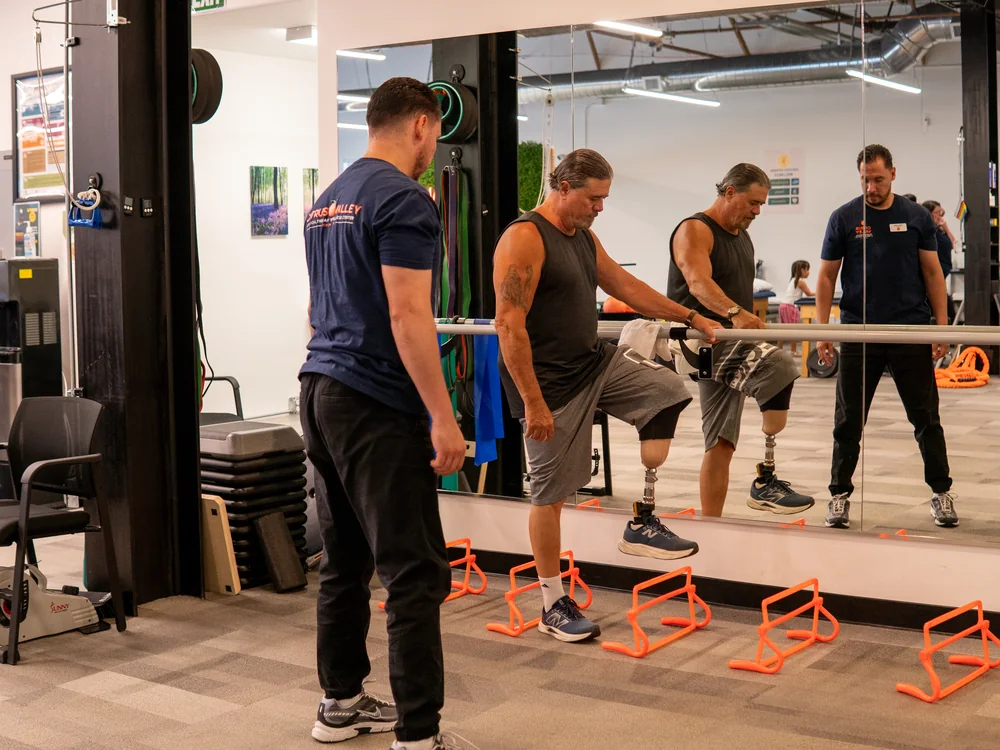
In practice that means task specific training rather than generic exercise. If standing from a chair is the problem, you practise standing from a chair, at a seat height and with an amount of help that makes it hard but possible, over and over. Balance is trained at the edge of your stability where the system is actually being asked to work, not in a position where you were already steady. Gait training breaks walking down into the pieces of it that broke: weight shift, step length, foot clearance, turning. Strength work has a place too, because muscles that have not been used properly for months are genuinely weaker, and so does the practical side of it: which walker, which brace, how to get up off the floor if you end up there. Sessions run 30 to 60 minutes, one on one, and your therapist re-tests your measurements at every visit so progress is measured rather than guessed at. Progress here is rarely a straight line, and having the numbers in front of you is what makes a slow week readable as a slow week instead of a failure.
Who It's For
Neurological rehab is for anyone whose movement changed because the nervous system changed, whether that happened overnight or slowly over years.
After a stroke or brain injury
One side does not answer the way it used to. The arm and hand feel heavy, the leg swings wide to clear the floor, and standing up takes concentration you never used to spend on it. Training is high repetition and specific to the tasks you lost. The outcome measured is function you can name: standing from the chair unassisted, walking to the mailbox, getting up off the floor.
Parkinson's, MS and other progressive conditions
The goal shifts from restoring what was lost to protecting what you have and managing the days that are worse than others. Large amplitude movement, gait work and strength training all have a role, and the plan is built around your energy rather than against it. The outcome measured is your balance and walking scores over time, and whether the near falls have stopped.
Unsteadiness, near falls and dizziness
You have caught yourself on the counter more than once, or the room moves when you turn over in bed. Balance depends on the inner ear, vision and sensation from your feet working together, so rehab tests which of the three is failing before it trains anything. The outcome measured is steadiness on the surfaces you actually walk on, including grass, gravel and stairs.
What to Expect from Neurological Rehab in Redlands
The first visit is about an hour, one on one with a doctor of physical therapy. Bring your walker, cane or brace if you use one, and a list of your medications.
The evaluation
Your therapist reviews your diagnosis, your medical history and what actually happened, then measures: strength, tone, sensation, coordination, how you move from sitting to standing, how you walk, and standardized balance tests that produce a number rather than an impression. Those numbers become the baseline everything afterwards gets compared against.
Setting the target
You name the tasks that matter to you, in your own words, and the plan is built backwards from them. Getting in and out of the car. Carrying a laundry basket down the hall. Standing at the sink long enough to finish the dishes. Vague goals produce vague programs, so expect your therapist to push for the specific version of what you want back.
Training, then re-testing
Each session is supervised and hands-on: gait training with support, balance challenged safely, functional strength, and coordination work at a difficulty that makes you work for it. Most plans of care run 2 to 3 visits a week for 4 to 6 weeks, and the tests from your evaluation are repeated so the direction of travel is visible. Home practice counts for more here than almost anywhere else, because repetition is the mechanism.
Sessions are supervised and progressed gradually, and you are guarded during anything that challenges your balance. Fatigue afterwards is normal, and with multiple sclerosis in particular your therapist will manage heat and exertion so a session does not cost you the rest of your day. Tell your therapist about any change to your medications or their timing, because it affects how you move. New or sudden symptoms are a different matter entirely: sudden weakness, facial droop, slurred speech, a change in vision or the worst headache of your life mean emergency medical care right away, not a physical therapy appointment.
My experience at Citrus Valley Physical Therapy was most gratifying. My pain is cirrently about a 3 out of 10. When I first arrived my pain level was a 8 out of 10.
Where to go next.

Stroke
Retraining the movement one side lost, task by task, with the numbers re-tested every visit.
Parkinson's
Large amplitude movement, gait work and strength training aimed at keeping what you have.
Balance and Gait Disorders
Testing which system is failing before training it, so the work targets the real cause.
Ready when you are.
All fields are required.