Balance & Gait Disorder Therapy in Redlands
You have started mapping the house by what you can hold on to. The counter, the doorframe, the back of the couch. Unsteadiness is not simply age arriving. It is a specific system underperforming, and systems can be retrained.
What causes balance and gait disorders?
Standing upright is not one skill. It is three systems agreeing on an answer: the inner ear reporting where your head is, your eyes reporting where the room is, and the sensors in your feet and hips reporting where the ground is. Your legs then have to be strong enough to act on that answer in a fraction of a second. When one input drops out the other two usually cover for it, which is why unsteadiness creeps in slowly rather than arriving all at once. Finding out which one dropped is the point of the evaluation, because the retraining is different for each.
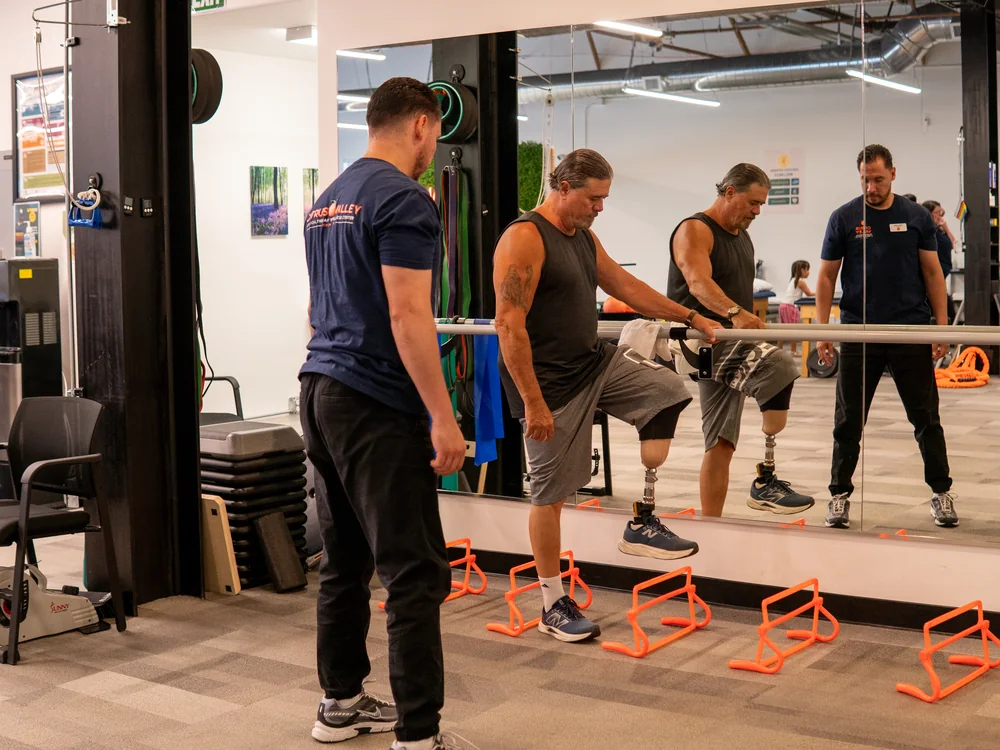
The inner ear reports head movement and head position to the brain many times a second. When it is inflamed, damaged, or sending a mismatched signal from one side, the brain receives bad information about which way is up and reacts by making you feel like the room moved. People describe it as spinning, floating, or a lurch when they roll over in bed or turn to look at something. Some cases settle on their own. Others need guided retraining so the brain learns to trust the signals it can still rely on.
Knowing you are tipping is useless if the leg cannot answer fast enough. Balance recoveries are strength events: the ankle has to grip, the quad has to catch the knee, the glute has to swing a leg out and plant it. Muscle power fades faster than muscle size, so people often look strong and still cannot produce force quickly. Rebuilding leg and hip strength is the most measurable fix we have for unsteadiness.
Your feet are the sensor that tells the brain what the ground is doing. When diabetes, chemotherapy, age, or nerve compression dulls that feedback, the brain loses its most detailed input and leans harder on vision to fill the gap. That is why the trouble shows up in the dark hallway, on gravel, on a thick rug, or the moment you look up at a shelf. Balance training here works two ways: sharpening what sensation remains, and deliberately training the other systems to carry more of the load.
A stroke, Parkinson's, multiple sclerosis, or another neurological condition can change how the brain plans and corrects a step. Sometimes it is weakness on one side, sometimes it is timing, sometimes it is a gait pattern that has quietly reorganized itself around a limitation. The nervous system remains capable of learning, but it learns from repetition of the right movement, not from being told to be careful. That is what neurological gait retraining is.
One fall, or one near miss, rewrites how you move. You shorten your stride, you keep both feet down longer, you stop turning your head while you walk. Every one of those adjustments feels safer and every one of them makes balance worse, because the systems that keep you upright only stay sharp when they are challenged. This is the loop that turns a single stumble into a housebound year, and it responds well to graded, supervised exposure.
Blood pressure medication, sedatives, and several common prescriptions list dizziness among their effects, and the risk climbs as the list grows. That is a conversation for your physician. What we can do is build enough margin into the rest of the system that a wobbly moment does not become a fall, and teach you how to move between lying, sitting, and standing so blood pressure has time to catch up.
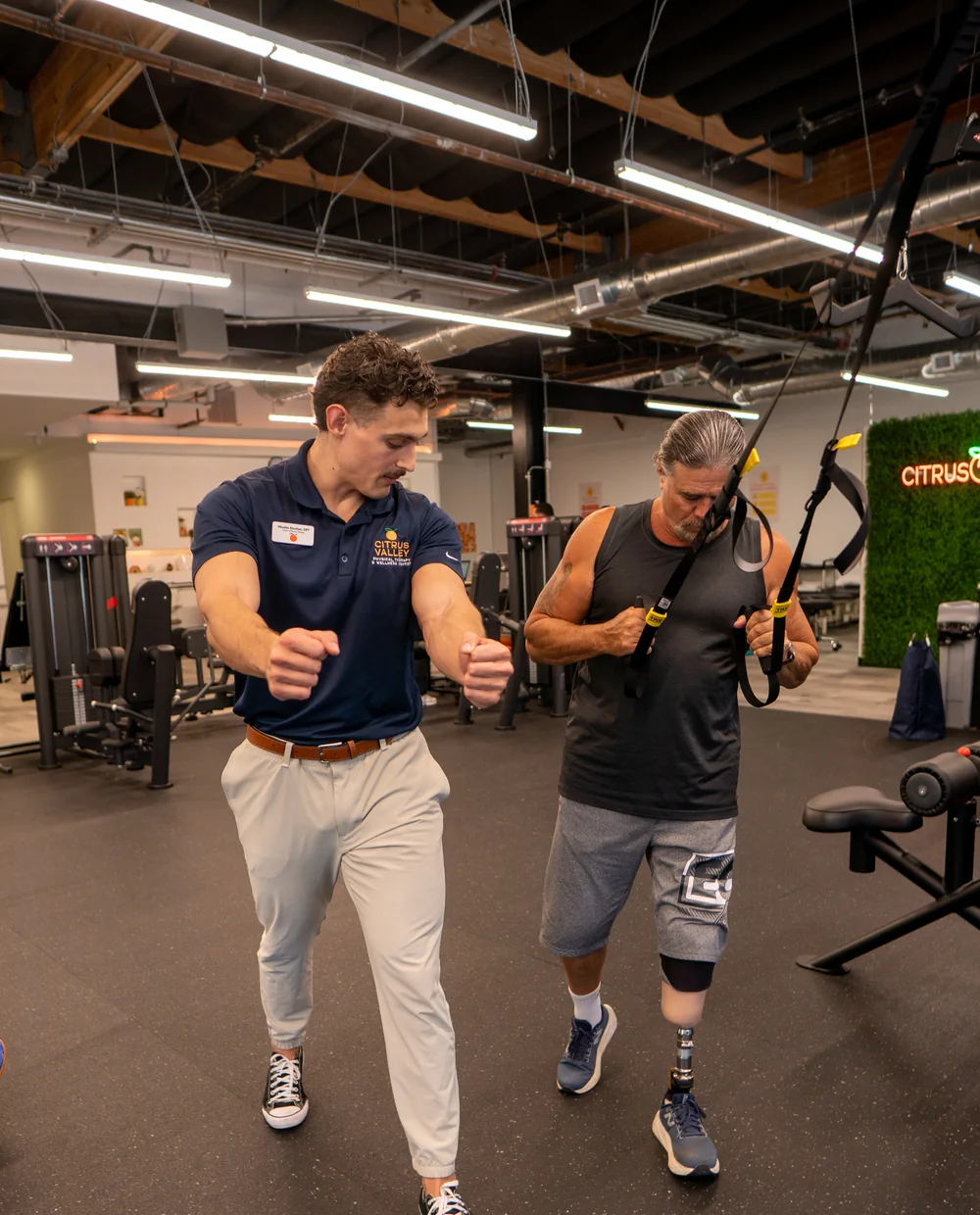
How physical therapy in Redlands helps.
Balance is trainable, which is the part most people are never told. Your therapist first works out which input has dropped out, then builds a plan that loads that specific system while keeping you safe enough to fail without falling. Early sessions use support and a stable surface. As you improve, the support comes away and the demands start looking like real life: turning your head while you walk, stepping over a threshold, standing on a soft surface, reaching for something on a high shelf, changing direction on command. Those are the exact moments that catch people out, and the way to get better at them is to rehearse them with a physical therapist standing next to you.
What to expect from your recovery.
Testing, and a starting point you can hold
Your first visit is about an hour, one on one with a doctor of physical therapy. We score your balance and walking with standard tests, measure leg strength, and screen the vestibular system so we are treating a finding rather than a hunch. You can start without a physician referral for up to 45 days or 12 visits in California, and we verify your insurance before that first visit.
Load the system that failed
Then the retraining begins, aimed at whatever the testing found. Most plans run 2 to 3 visits a week for 4 to 6 weeks in 30 to 60 minute sessions, and the exercises get measurably harder each week rather than staying comfortable. Your scores get re-tested as you go, so progress is a number you can see and not a feeling you are asked to report.
Take it back out into your life
The last stretch moves the work off the clinic floor and into the places that made you nervous: curbs, gravel, a dim hallway, carrying something in both hands. Most patients find the fear fades roughly in step with the scores. You leave with a home program that keeps the gains.
I highly recommend this physical therapy office! Dr. Haley is incredibly knowledgeable, caring, and professional.
Pain rarely travels alone.
Dizziness & Vertigo
Spinning sensations and vestibular dysfunction go hand in hand with balance loss. We address the root cause.
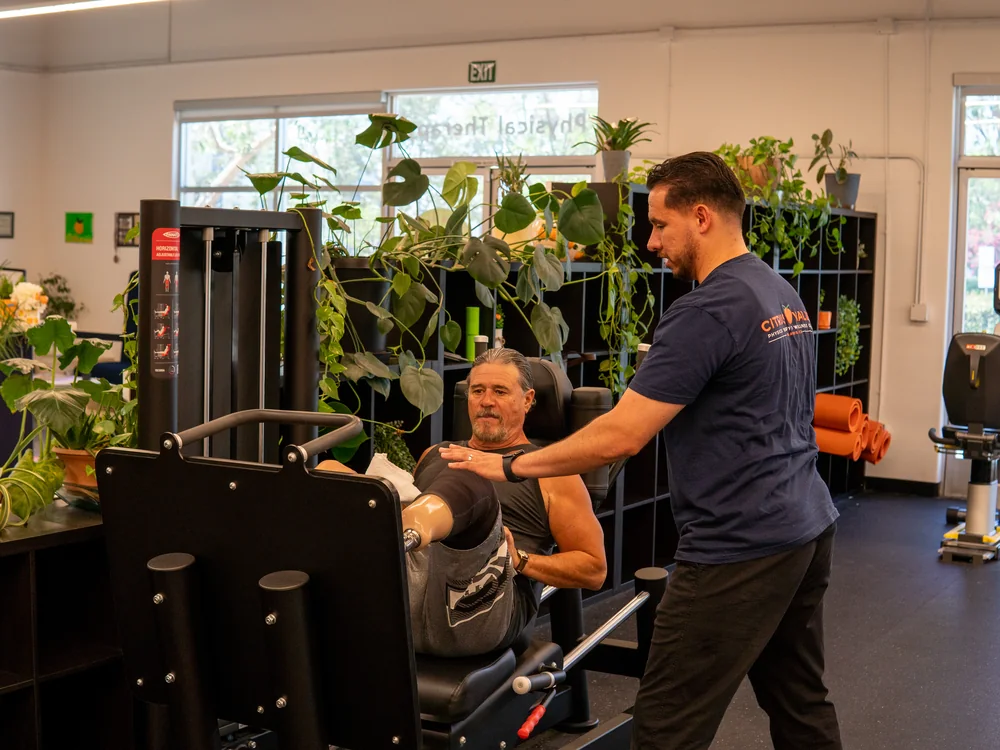
Fall Prevention Services
Screening and strength work for anyone who has already had one fall, or one close call.
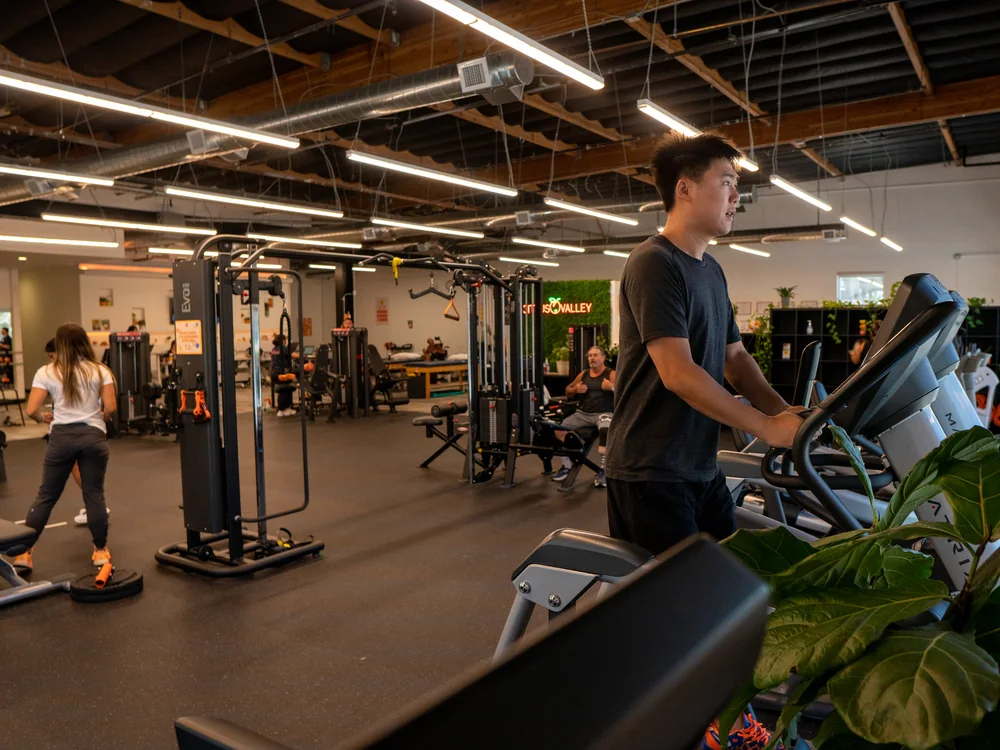
Foot & Ankle Pain
Weak or painful feet are the foundation of balance problems. We rebuild from the ground up.
Ready when you are.
All fields are required.