Fall Prevention Treatment in Redlands
You take the handrail with both hands now. You plan the route around the stairs, you skip the uneven part of the sidewalk, and you have quietly stopped going out after dark. Balance is not one thing that fades with age. It is several systems working together, and each one can be tested and trained.
What causes falls?
Most falls are not one mistake. They are the moment several small deficits line up: a bit less strength, a bit less ankle motion, slightly slower reactions, glasses that blur the edge of a step. Each of those is measurable, and most of them respond to training.
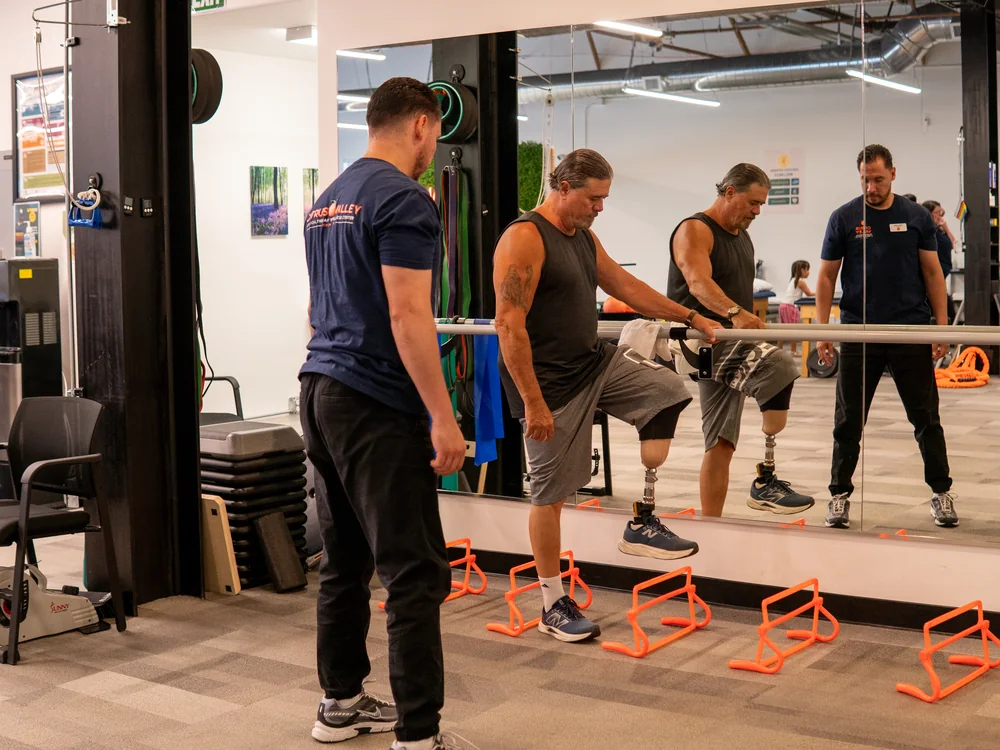
Catching yourself after a trip is a power task: the leg has to produce force in a fraction of a second. Power fades earlier and faster than raw strength does, which is why someone can still carry groceries yet be unable to stop a stumble. Training speed and load together is what brings that reaction back.
The ankle is the first joint to answer when the ground moves, and the soles of the feet are where the information comes from. Stiffness from arthritis or old injuries, plus reduced sensation from neuropathy or diabetes, means the correction is both slower and less accurate. People compensate by taking shorter steps and lifting the feet less, which is exactly the gait that catches on a rug edge.
The vestibular system in the inner ear tells the brain which way is up and steadies vision while the head moves. It declines with age, and displaced crystals can cause brief, violent spinning with a change of position. A short spin while getting out of bed or reaching into a high cupboard is a common lead in to a fall. This is testable, and often very treatable.
Balance leans heavily on vision, and vision is the system that changes most quietly. Reduced contrast makes the edge of a step or a curb hard to judge, especially in dim light or a hallway at night. Bifocal and progressive lenses blur the ground exactly where you look when stepping down. Part of the assessment is finding how much you lean on vision, then training the other systems.
If blood pressure falls when you stand, the few seconds of grey, floaty lightheadedness that follow are a genuine fall risk. Blood pressure medication, sedatives, sleep aids and several drugs taken together all make it more likely. We check blood pressure lying and standing when the history points that way, and medication changes stay with your physician.
After a fall, or a near miss, most people start doing less. Doing less costs strength, endurance and confidence, which raises the risk of the next fall, which leads to doing even less. The fear is a rational response to a real event, but avoidance is the wrong treatment for it. Graded, supervised exposure to the things that feel risky is how the confidence and the capacity come back together.
How physical therapy in Redlands helps.
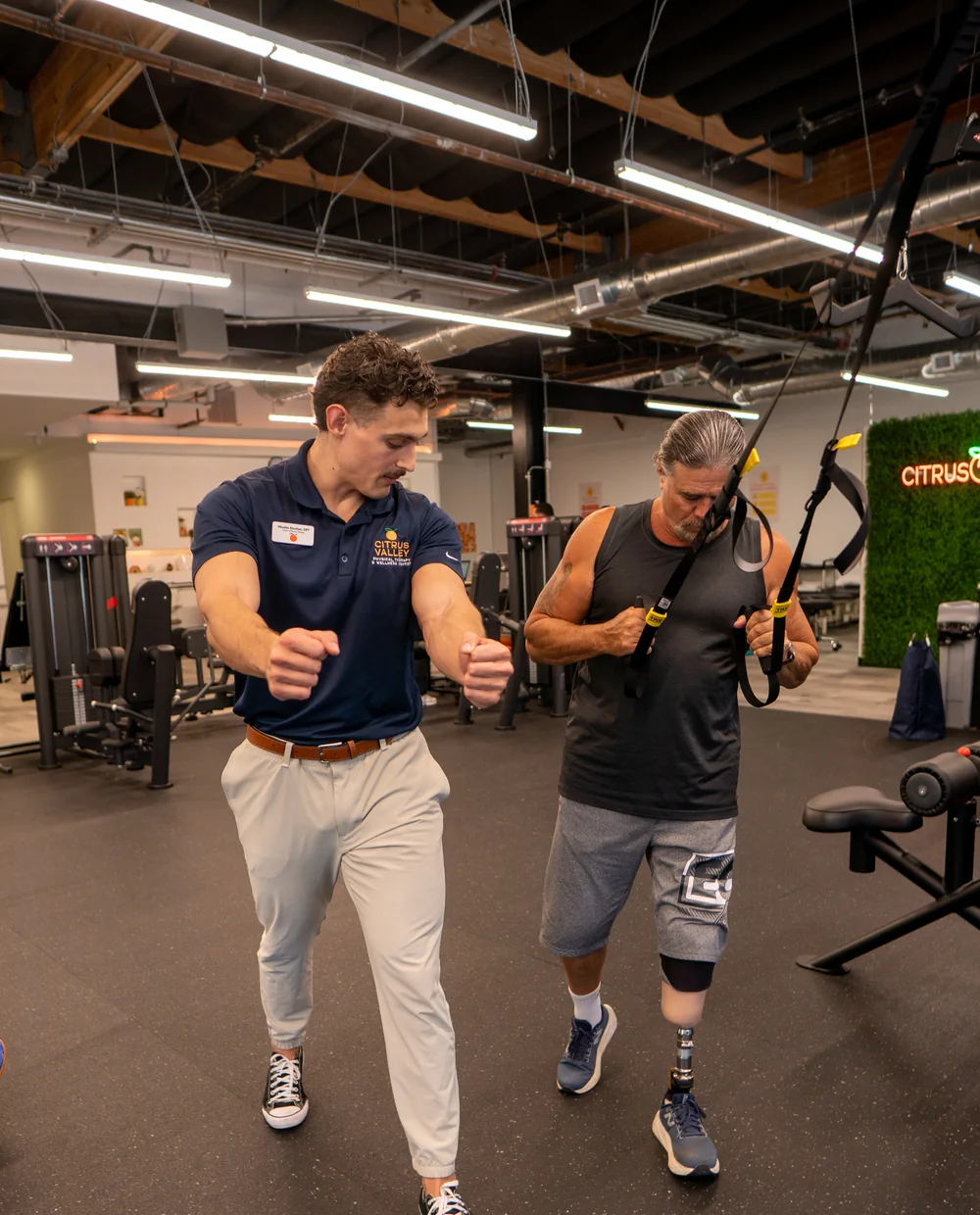
Being told to be careful is not a plan. Physical therapy starts by finding which of the systems above is actually letting you down, because the training for weak legs looks nothing like the training for an inner ear problem. Once we know, the work is specific and progressive: strength and power for the legs and hips, ankle range and foot awareness, reactive stepping so the body relearns how to catch itself, and walking practice on the surfaces that worry you. Balance improves when it is challenged safely, which means we take you close to your limit with a therapist right there, rather than keeping every exercise easy.
Sessions run 30 to 60 minutes and are one on one. The first visit is about an hour with a doctor of physical therapy who tests and records your baseline. Most plans run 2 to 3 visits a week for 4 to 6 weeks, with those tests repeated as you go so improvement is measured rather than assumed. In California you can start physical therapy without a physician referral for up to 45 days or 12 visits, whichever comes first, and some plans still require one for coverage, so call or text and we will check yours. If you want the structured programme rather than the explanation, that is our fall prevention service.
What to expect from an assessment.
Finding out which system is failing
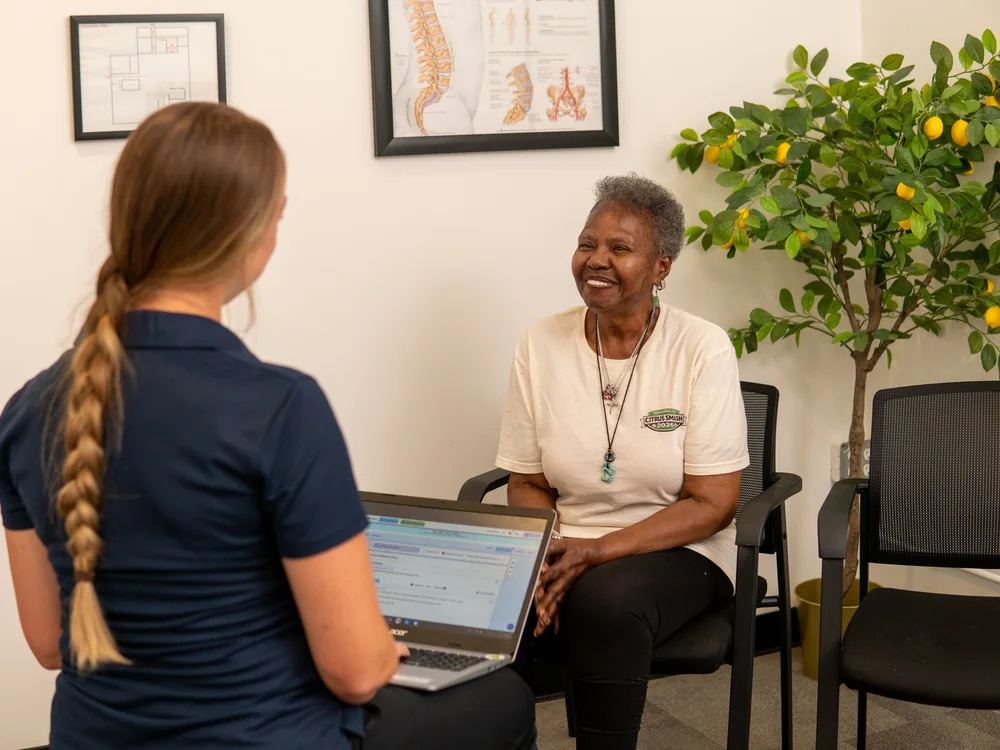
The first visit is about an hour, one on one with a doctor of physical therapy. We take the history of any falls and near misses, review medications and vision, then test: standing balance with and without vision, walking speed, turning, sit to stand, ankle range and leg strength side to side. Where the history suggests it, we also screen the inner ear and check blood pressure lying and standing. You leave with a clear picture of what is driving the risk.
Training the parts that came up short
The plan targets your specific deficits rather than a general balance class. That usually combines leg and hip strengthening with real load, reactive stepping drills where you are safely put off balance on purpose, and walking practice with head turns, direction changes and softer surfaces. If the inner ear is involved, vestibular work runs alongside it.
Making it hold at home
Balance is a use it or lose it capacity, so the last phase is about what continues after discharge. We repeat the tests you started with so you can see the difference, then set a home programme short enough that it actually gets done. We also go through the practical layer: footwear, lighting, rugs, bathroom setup and how to get up from the floor if you do go down.
All the staff at Citrus Valley PT are kind and encouraging. My therapy for my knee was helpful. I have joined their wellness program to strengthen my aging body and feel comfortable being there.
What we often treat alongside it.
Balance and Gait Disorders
When walking itself has changed, we measure the pattern and retrain it step by step.
Dizziness and Vertigo
A brief spin on standing or rolling over is one of the more fixable causes of a fall.
Neuropathy
Numb feet send the brain poor information. We train the systems that can make up the difference.
Ready when you are.
All fields are required.