Pre and Post Partum Recovery Treatment in Redlands
You got the six week check, you got cleared, and you went home. Cleared means the tissue healed. It does not mean anyone assessed your abdominal wall, your pelvic floor or your hips, and those are usually what makes lifting, running and sneezing still feel wrong months later.
What Changes During Pregnancy and After Delivery?
Pregnancy is nine months of progressive load change: the abdominal wall lengthens, the ribcage widens, the center of mass moves forward and the pelvic floor carries more weight every week. Delivery, whether vaginal or cesarean, then adds a healing injury on top of all of it. None of that is permanent, but it does mean the body you are asking to lift a car seat and get back to running is not the one you had a year ago. These are the changes worth assessing directly.
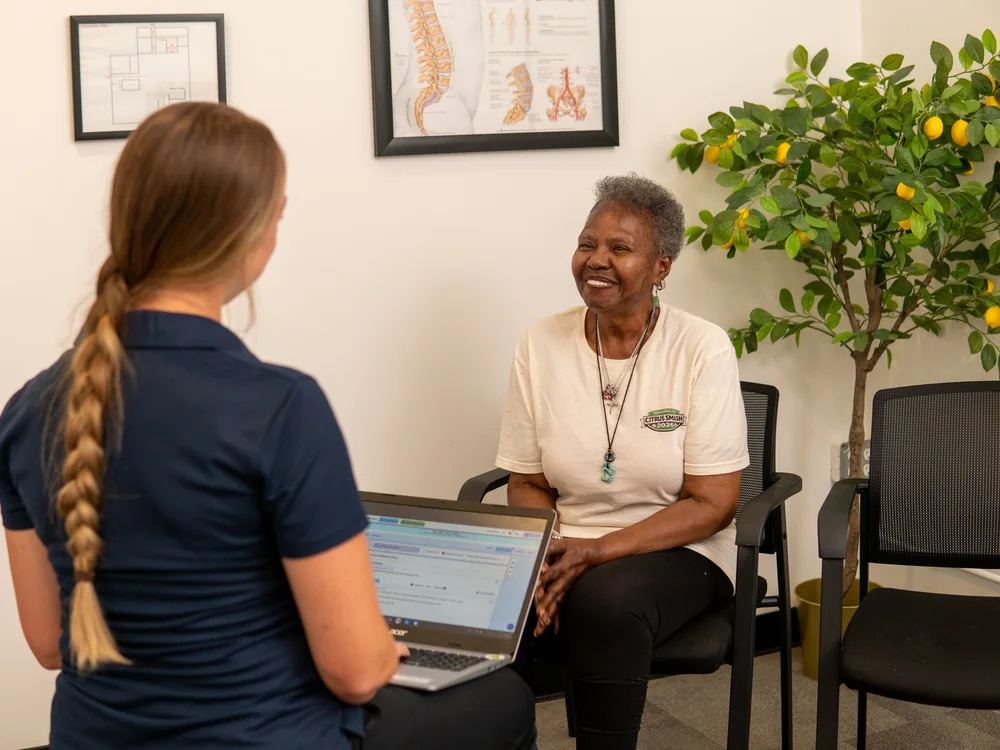
Pain across the back of the pelvis or at the pubic bone usually shows up in the second or third trimester and is often blamed on hormones alone. Load is the bigger half of the story: the pelvis is being asked to transfer more weight through joints that are moving slightly more than they used to. Strengthening the hip and trunk muscles that control that transfer, plus support and technique for rolling, stairs and getting out of the car, changes it during pregnancy rather than after.
The two halves of the rectus abdominis separate along the midline to make room for the baby. That is normal and expected. What matters after delivery is not the width of the gap but whether the connective tissue between them can generate tension when you lift, cough or roll over. We test how that midline behaves under load and train it, which is a different job from doing more crunches.
A vaginal delivery stretches and sometimes tears the pelvic floor muscles, and the repair heals as scar which behaves differently from the tissue it replaced. That shows up as leaking, urgency, heaviness or pressure at the vaginal opening, or pain with intercourse. All of those are common and none of them are something you have to accept as the price of having a baby.
A cesarean is abdominal surgery through several layers of tissue, and the scar tethers those layers together as it heals. The result is often numbness or a shelf above the incision, difficulty engaging the lower abdominals, and back or hip pain that seems unrelated. Scar mobilization and progressive loading restore the glide and the strength, whether the surgery was recent or years ago.
Newborn care is hours a day held in one position: rounded forward to feed, hip cocked to carry, one arm lifting a car seat in and out. Neck, upper back and wrist pain in the first postpartum year is usually about that repeated load rather than anything that happened at delivery. Changing the setup and building capacity in the tissues doing the work is straightforward once someone looks at it.
Impact and heavy lifting ask the pelvic floor and abdominal wall to manage force quickly and repeatedly, and that capacity is rebuilt rather than restored by the calendar. Going straight back to where you left off is the most common reason people end up leaking or in pain. A graded return, tested against what you can actually control, gets you further faster.
How Physical Therapy in Redlands Helps
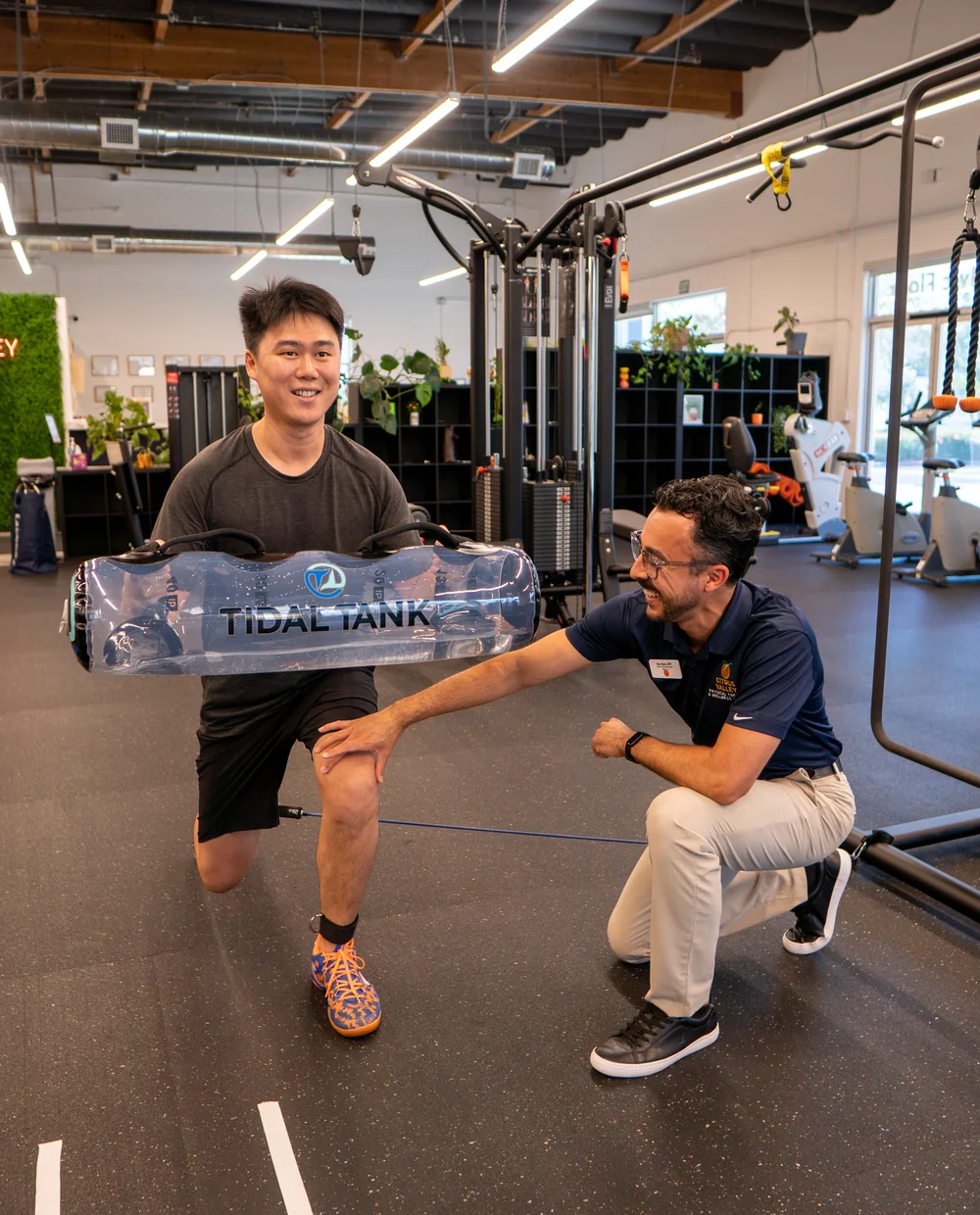
Citrus Valley has a pelvic floor certified doctor of physical therapy on staff, which means pelvic floor therapy is part of the plan here rather than a referral somewhere else. During pregnancy the work is about staying comfortable and capable: managing pelvic girdle pain, keeping hips and trunk strong, and preparing the pelvic floor for delivery. Afterwards it is about rebuilding, in order, the abdominal wall, the pelvic floor and the strength to carry, lift and train again. Sessions are 30 to 60 minutes, one on one, with the first visit running about an hour. You can start without a physician referral in California for up to 45 days or 12 visits, and we verify your benefits before your first visit so there is no surprise bill.
What to Expect
The evaluation
About an hour, one on one with a doctor of physical therapy. We take your pregnancy and birth history, how delivery went, what has been bothering you and what you want to get back to. Then we look at how you breathe, brace, roll, squat and lift, and we assess the abdominal wall and hips. A pelvic floor assessment is explained before it is offered, and you decide whether and when it happens.
Through pregnancy
Care during pregnancy is about keeping you moving comfortably as the load changes. That means hands on work and positioning for pelvic girdle or back pain, hip and trunk strength you can keep doing safely, coordination and relaxation work for the pelvic floor, and practical strategies for sleep, work and the daily movements that have started to hurt. Exercise is adjusted as each trimester changes what makes sense.
After delivery, back to load
Postpartum care rebuilds in order: breathing and deep core control first, then the abdominal wall and pelvic floor under real load, then carrying, lifting and impact. Most plans of care run 2 to 3 visits a week for 4 to 6 weeks, and your measures get re-tested at every visit rather than at the end, so the decision to run or lift again is based on what you can control, not on how many weeks have passed.
I have been very pleased with Citrus Valley Physical Therapy, Haley is very professional, knowledgeable and great to work with! Thank you.
Related conditions we treat in Redlands.
Pelvic Pain
Pain with sitting, with sex or through the tailbone has a muscular and nerve driver that can be examined and treated.
Bladder & Bowel Dysfunction
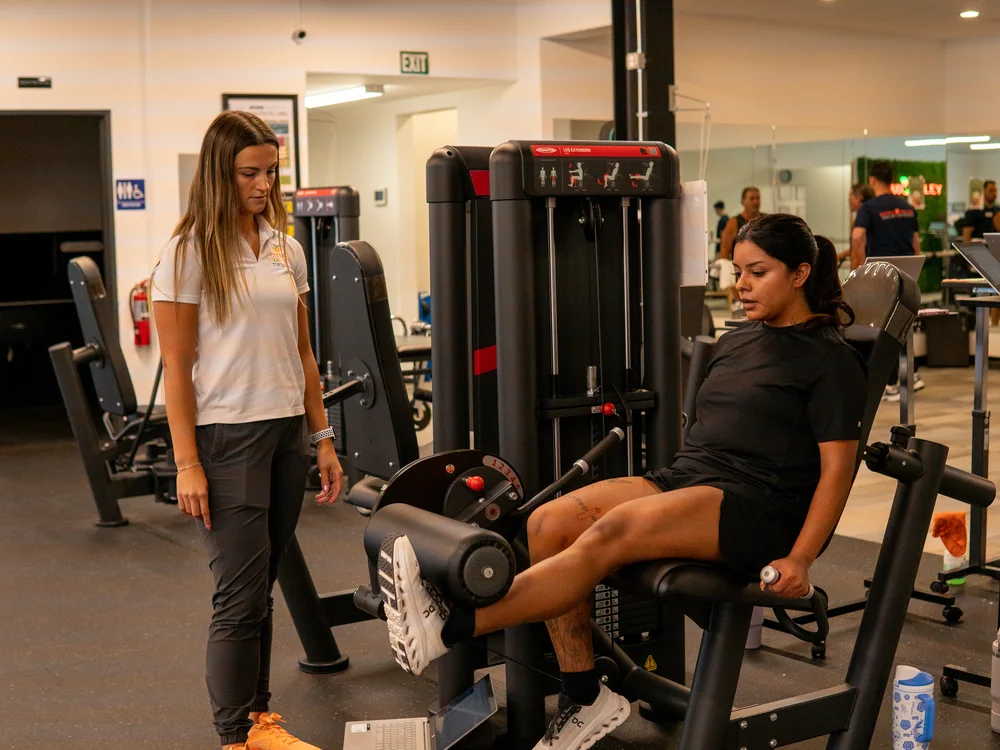
Leaking when you cough, run or lift is common after delivery. Common is not the same thing as untreatable.
Back Pain & Sciatica
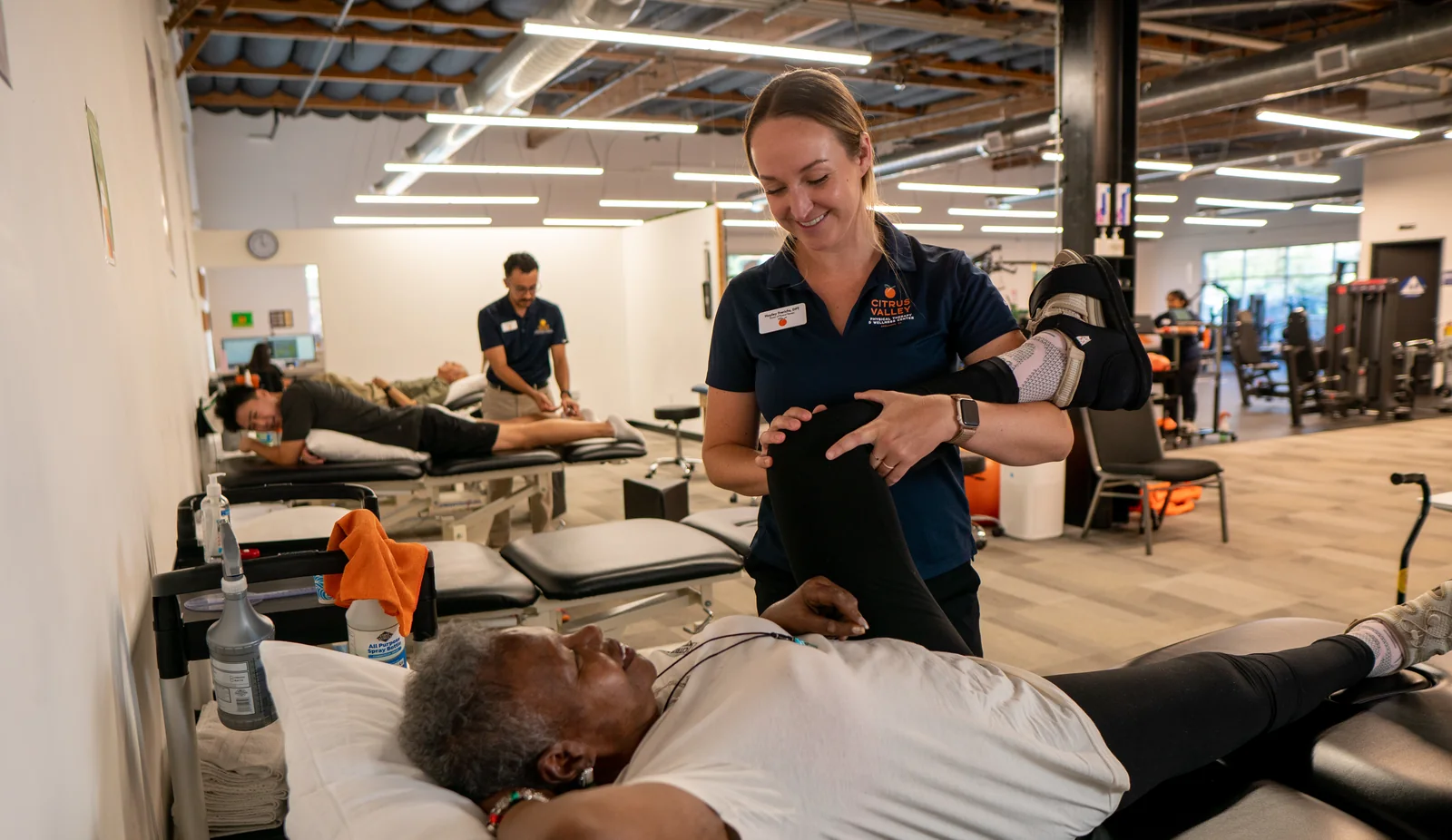
Back and hip pain that started in pregnancy or with carrying an infant responds to strength and load, not rest alone.
Ready when you are.
All fields are required.