Pelvic Pain Treatment in Redlands
The scans came back clean, so you were told to manage the stress and wait it out. The pain is real. Normal imaging only means the pictures found nothing, and the muscles, nerves and joints of the pelvis are not what the pictures were looking at.
What Causes Pelvic Pain?
Pelvic pain covers everything between the navel and the hips: the lower abdomen, the tailbone, the perineum, the groin, deep ache with sitting, burning with urination, pain with sex. Most people arrive here after an ultrasound, a scope, a course of antibiotics and no clear answer. That is because the pelvic floor muscles, the nerves that pass through them and the joints they attach to are rarely what gets examined, and they are exactly what a pelvic floor evaluation looks at.
The pelvic floor is a sling of muscles that has to relax as reliably as it contracts. When it holds a low grade contraction all day it aches at rest, refers pain into the tailbone, groin and lower abdomen, and gets in the way of urinating, emptying the bowels and sex. This is the most commonly missed driver of pelvic pain, and it is the reason more kegels often make things worse rather than better. The work here is downtraining and lengthening first.
Cesarean incisions, episiotomy and tearing, hysterectomy, hernia repair and endometriosis excision all leave scar that binds layers of tissue which are supposed to slide across each other. Restricted scar pulls on everything attached to it, which is why the pain often sits somewhere other than the incision. Scar mobilization and graded loading restore that glide, and old scars respond as well as recent ones.
The pelvic floor anchors to the same bony ring as your hip rotators, abdominal wall and deep back muscles, so it responds to what those structures are doing. A stiff hip, an irritated sacroiliac joint or a ribcage that cannot rotate will change how the pelvic floor is loaded every time you walk or stand up. Treating the pelvis without treating the hips and spine tends to give short lived relief.
The pudendal and other nerves travel through and beside pelvic muscles and can be compressed or sensitized along the way. That produces burning, electrical or numb sensations rather than a dull ache, often worse the longer you sit and easier when you stand or lie down. Relieving the muscular tension around the nerve pathway and changing how you load sitting are the first levers we pull.
Straining against constipation, urinating just in case, and holding it for a whole shift because there is no good moment to stop all train the pelvic floor to work in the wrong direction. Constipation in particular is one of the most common and most reversible drivers of pelvic pain we see. Fixing mechanics, position and timing changes symptoms faster than most people expect.
Pain that has been present for months trains the body to protect. You brace the abdominal wall, hold your breath, clench through the pelvis and brace before anything that has hurt before, and each of those responses adds load to already irritated tissue. Breathing mechanics, graded exposure and understanding what the pain is and is not signalling are treatment, not consolation prizes.
How Physical Therapy in Redlands Helps
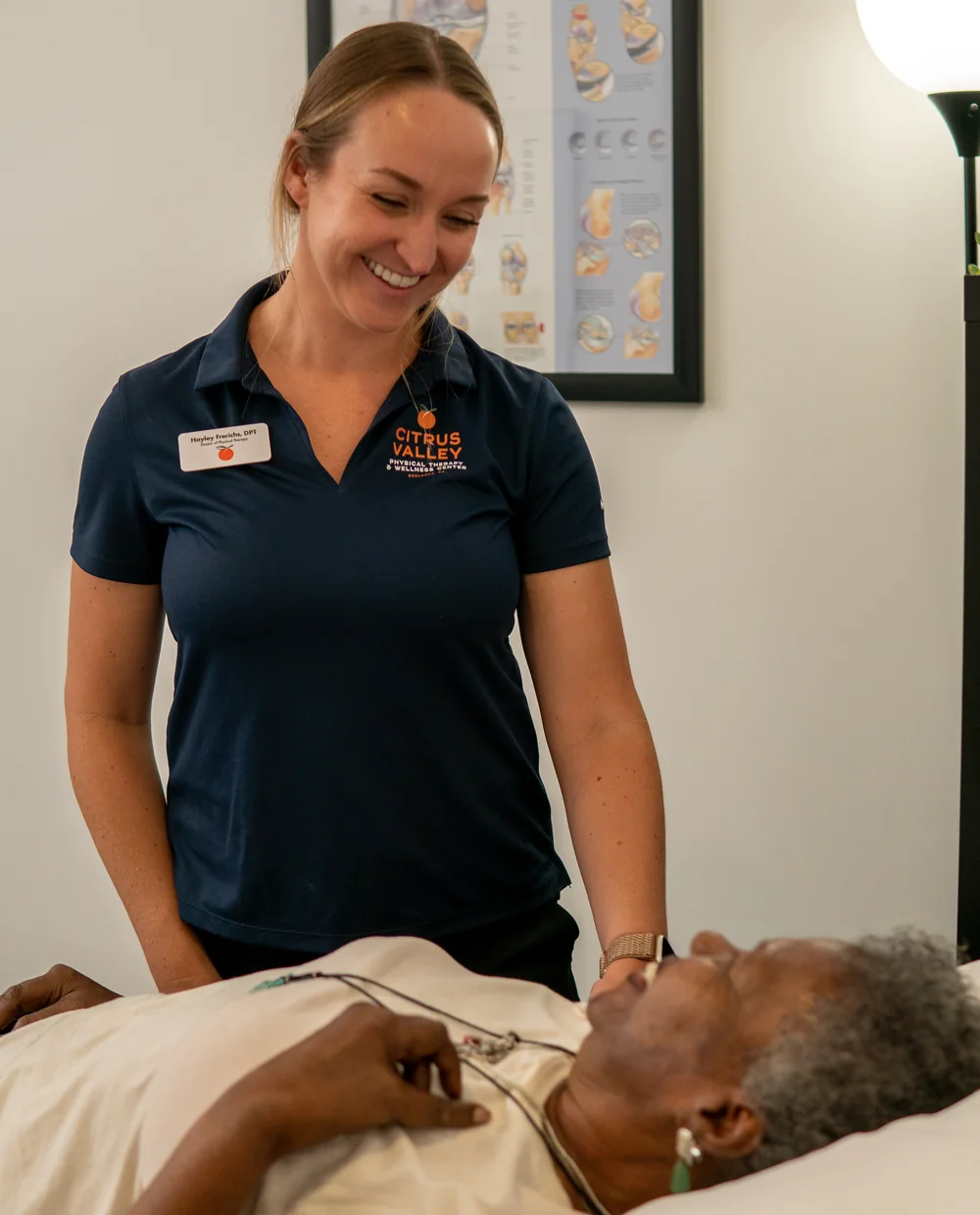
Citrus Valley has a pelvic floor certified doctor of physical therapy on staff, so this is not a general orthopedic plan with a few extra exercises bolted on. It is pelvic floor therapy: an assessment of pelvic floor tone, strength and coordination alongside your hips, abdominal wall, breathing and sitting posture, then treatment aimed at whichever of those is actually driving your symptoms. Nothing is examined before it has been explained to you and you have agreed to it, and you can decline or postpone any part of the exam and still be treated. In California you can start without a physician referral for up to 45 days or 12 visits, some plans still require one, and we check your benefits before your first visit so you know what you owe.
What to Expect
A conversation, first
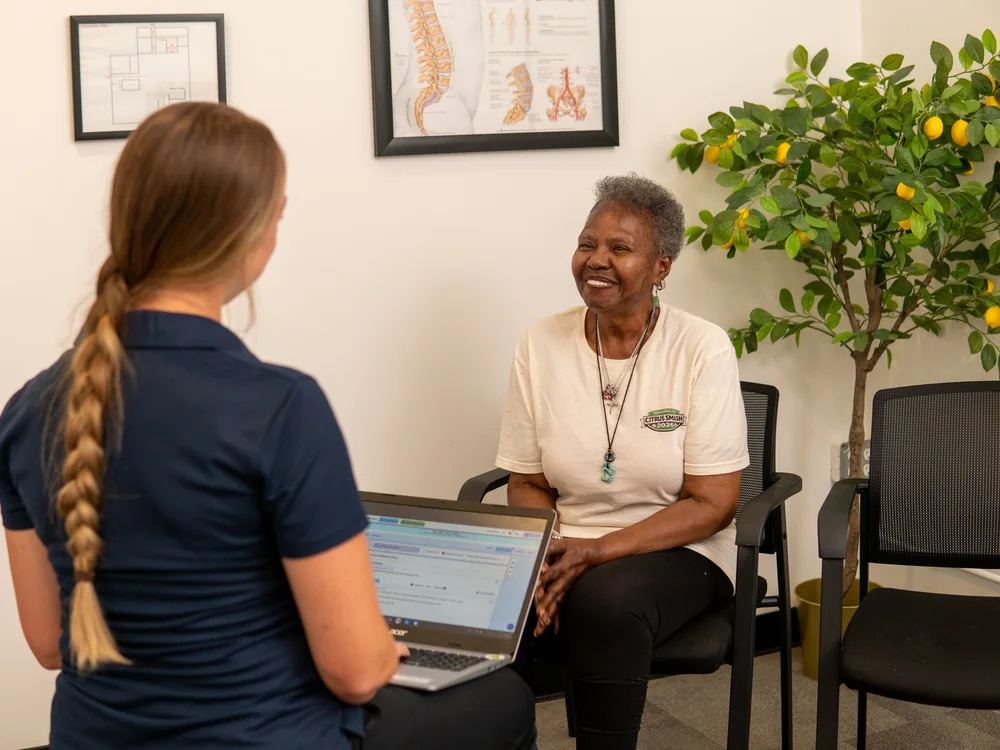
Your first visit is about an hour, one on one with a doctor of physical therapy, and it begins fully clothed and sitting down. We go through when the pain started, where it sits, what makes it worse, how long you can sit, and how bladder, bowel and sexual function have been affected. These are clinical questions, asked plainly, because the answers point at the driver.
The examination, on your terms
We assess your hips, low back, abdominal wall and breathing mechanics externally first. An internal pelvic floor assessment is the most direct way to measure muscle tone, strength and coordination, and it is offered with a full explanation of what it involves and why. You can consent to it, defer it to a later visit, or decline it entirely, and there is an external plan either way.
Treatment and graded return
Most plans of care run 2 to 3 visits a week for 4 to 6 weeks. Treatment usually blends hands on release, downtraining and breathing work, hip and trunk mobility, scar work where relevant, and bladder or bowel habit changes you can start immediately. From there you build back the things pain took: sitting through a workday, exercise, intimacy. Your measures get re-tested at every visit, so you can see whether it is working.
I highly recommend this physical therapy office! Dr. Haley is incredibly knowledgeable, caring, and professional.
Related conditions we treat in Redlands.
Bladder & Bowel Dysfunction
Leaking, urgency and incomplete emptying share the same muscles as pelvic pain and often improve alongside it.

Constipation & IBS
Straining and incomplete emptying keep the pelvic floor irritated. Mechanics, position and timing are all trainable.
Pre & Post Partum
Pregnancy and delivery change the pelvic floor and the load it carries. Both are worth assessing directly.
Ready when you are.
All fields are required.