Outpatient Therapy in Redlands
The hospital handed you a folder and a phone number. Outpatient care is the part that rebuilds you: a booked hour in a clinic, equipment that will not fit in a living room, and the same therapist tracking the whole arc.
What is outpatient therapy?
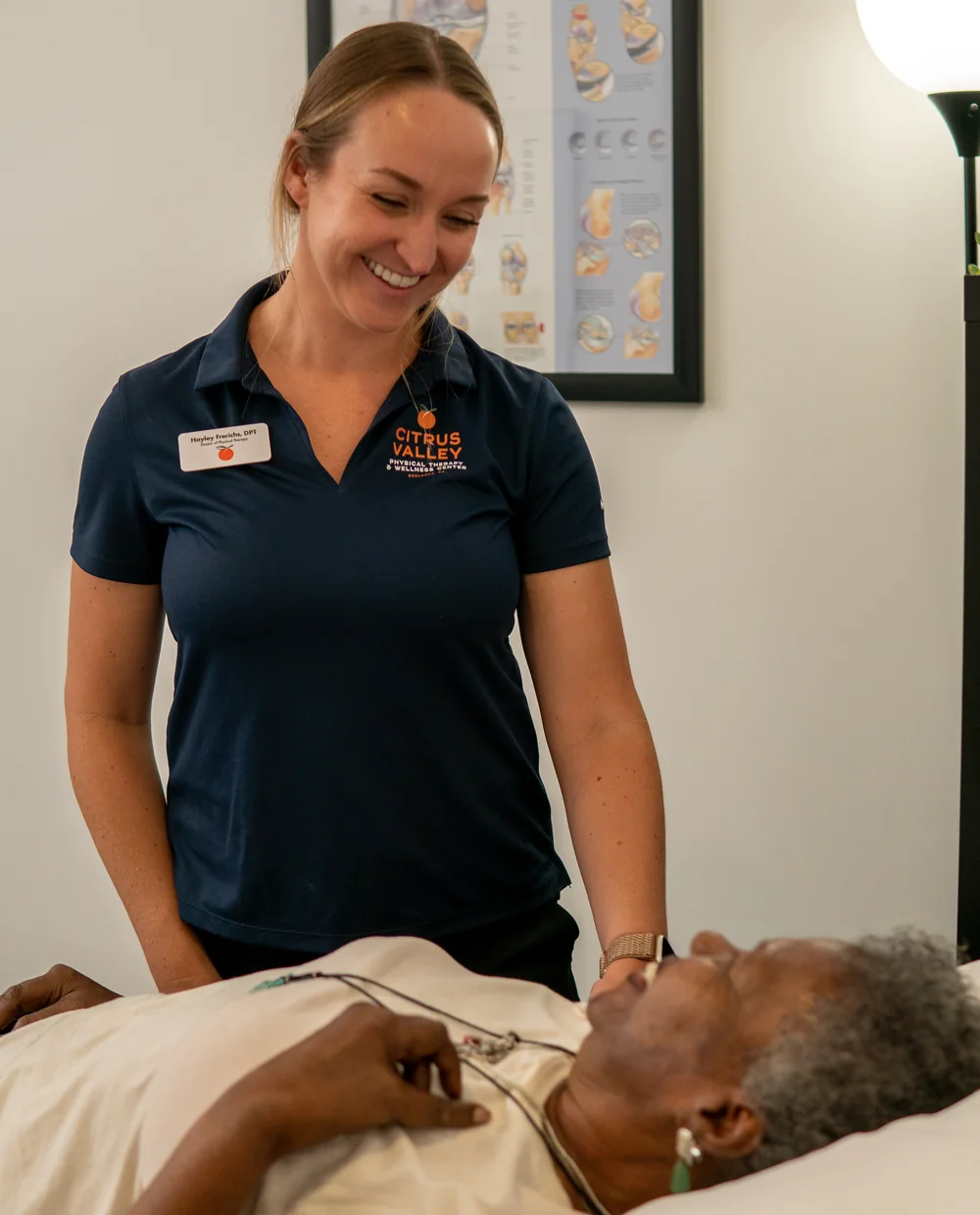
The hospital sent you home with a folder of exercises and a number to call. Maybe someone came to the house for a few weeks after that, and the work quietly stopped at whatever could be done safely in a hallway with a kitchen chair. Outpatient therapy is the next step, and it is a different setting on purpose. You travel to a clinic for scheduled visits, you use equipment that does not fit in a living room, and you work with a licensed physical therapist on a fixed rhythm rather than whenever a route allows. Nothing about your recovery has to be improvised around your furniture anymore.
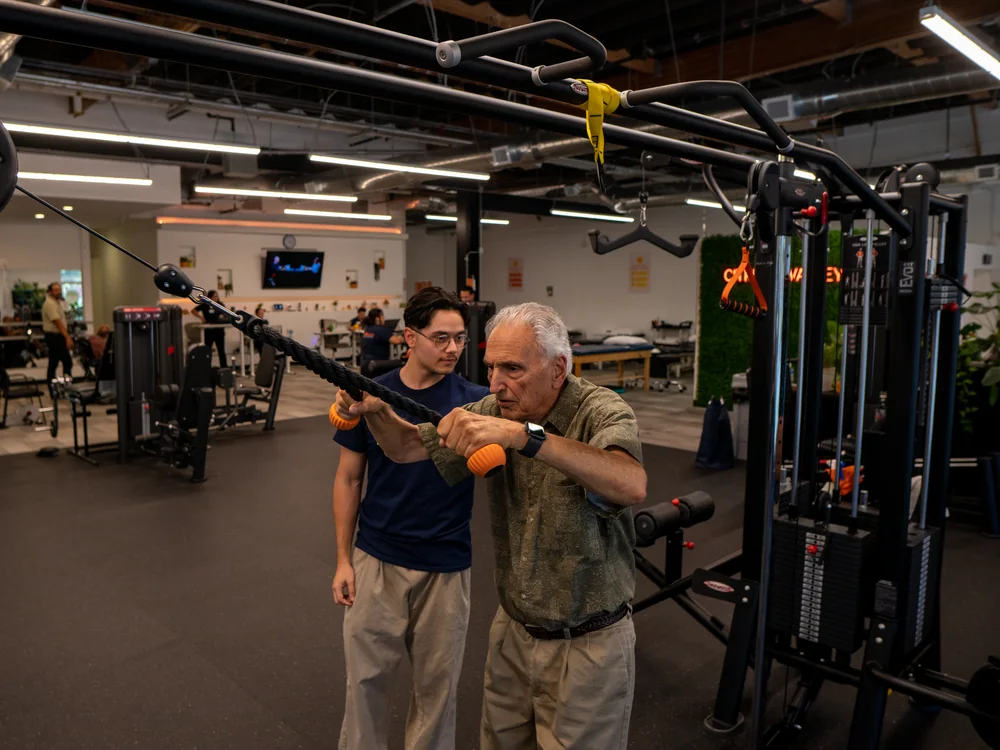
That change of setting changes what is possible. In a clinic we can load a joint properly, watch you walk a real distance, and put a treadmill, a cable column, a step or a treatment table under the exact movement that is failing. It also changes the record keeping. Your first visit runs about an hour, one on one with a doctor of physical therapy, and it produces a written plan of care: what we are treating, how often you come in, what gets measured, and what has to be true before you are discharged. That plan is what your insurance authorizes and what your therapist re-tests against at every visit, so progress is measured rather than guessed at.
Who it's for.
Outpatient care suits people who can travel to a clinic and are ready to work at a level a home program cannot reach. That covers more people than most expect, including plenty who never saw the inside of a hospital.
Stepping down from hospital or home care
You have been discharged from an inpatient stay or finished a run of home health, and you are safe at home but nowhere near back to normal. Outpatient picks the work up at a harder level, with real equipment and real distances, so the gains keep coming instead of flattening out at the front door.
Fitting a full plan around a working week
You cannot disappear for half a day, twice a week, for six weeks. Sessions run 30 to 60 minutes and the clinic opens at 7:00am Monday through Friday, so most people book a standing early slot and are at work on time. A schedule you can actually keep is what lets a plan of care finish.
Handling something that never needed a hospital
The shoulder that has ached for eight months, the knee that gave out on a hike, the back that seizes every spring. In California you can start physical therapy without a physician referral for up to 45 days or 12 visits, whichever comes first, so an evaluation does not have to wait on anyone else's calendar.
What to expect from outpatient therapy in Redlands.
A course of outpatient care is not a series of unrelated appointments. It is one plan with a beginning, a middle and an end, and you should be able to say where you are in it at any point.
Your evaluation and the plan that comes out of it
The first visit runs about an hour, one on one with a doctor of physical therapy. You talk through what happened and what you need to get back to, then you get a physical exam: range of motion, strength, balance, how you walk, and what reproduces the symptom. Those become your baseline numbers. Before you leave you know how many visits a week we are recommending, roughly how long the plan runs, and exactly what we will keep measuring.
The middle weeks, where the work happens
Most plans of care run 2 to 3 visits a week for 4 to 6 weeks, with sessions of 30 to 60 minutes. The early visits are the Pain phase, calming the symptom down enough that you can move and be assessed properly. Prime restores the motion and control the joint lost. Perform loads it and builds the capacity you need for work, sport or a flight of stairs. Your therapist re-tests the same measurements at every visit, so a plan that is not working gets changed rather than repeated.
Authorization, re-authorization and discharge
Insurance often authorizes a block of visits rather than the whole plan at once. When that block runs low, your therapist sends progress notes and requests more, and the front desk handles that paperwork before you run out of visits rather than after. Discharge is its own step and it is the Prevent phase: a program you can hold on your own, the loads and ranges worth protecting, and a straight answer about when it is worth calling us again.
You may not need a referral to start. California direct access lets you begin physical therapy without a physician referral for up to 45 days or 12 visits, whichever comes first. Some plans still require one for coverage and some require authorization before the first visit, so call or text us and we will verify your benefits before you commit to anything.
Very professional, but friendly employees. Calm environment, not chaotic like so many other PT places. Will always come here if need more PT.
Where to go next.

Physical Therapy
What actually happens in treatment, and how a plan gets built around your goals.

Orthopedic Therapy
Joint, muscle and post surgical care for the injuries that brought you in.
Shoulder Pain
One of the most common reasons people book an outpatient evaluation here.
Ready when you are.
All fields are required.