Gross Motor Disabilities Treatment in Redlands
Standing up, stairs, curbs, getting across a parking lot without planning it first. When the big movements stop being automatic, everything else in the day gets rearranged around them.
What causes gross motor disabilities?
Gross motor skills are the big ones: standing, walking, turning, climbing, getting up off the floor. When they are hard, the effort is invisible to everyone else and exhausting to you. People notice you are slower. They do not see that you planned the route, chose the chair with arms, and decided which door to use. Gross motor difficulty is not one diagnosis. It is what happens when strength, balance, coordination, or the signal between brain and muscle is interrupted, and each responds to different training. The first job is finding which one is limiting you today.
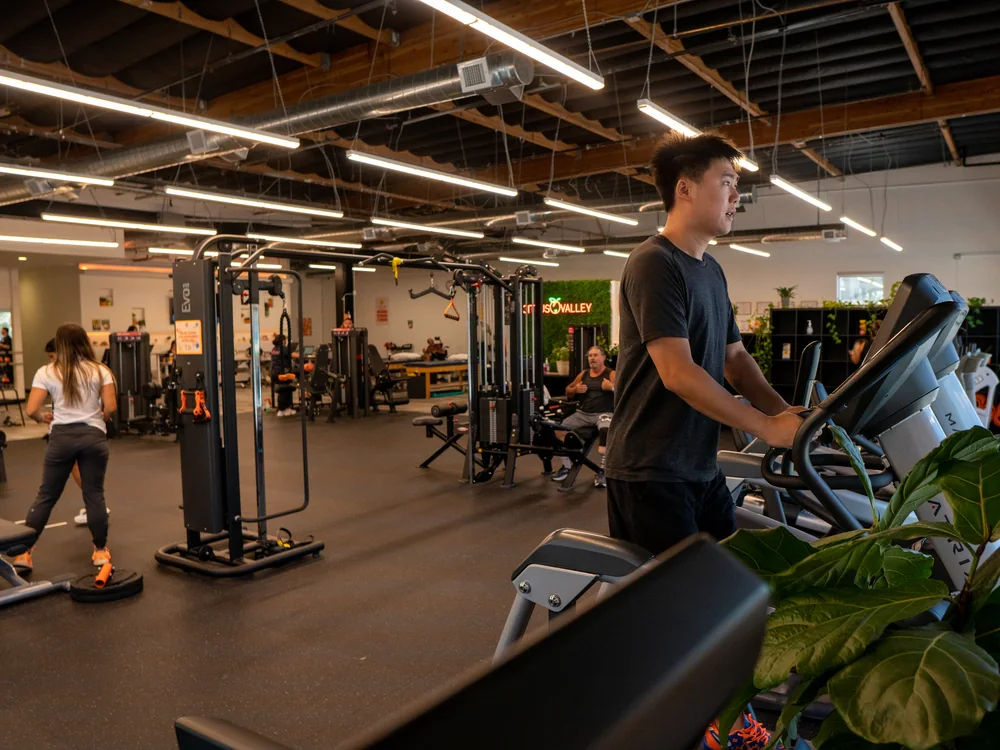
When the part of the brain that plans movement is injured early, muscle tone and coordination develop differently, and the pattern often locks in over years of walking a certain way. The injury itself does not progress, but the secondary effects do: tightness, joint stiffness, and muscles that never got loaded evenly. Those secondary effects are trainable at almost any age, which is why people who were told their function was fixed often still gain ground. See our cerebral palsy page for more on that path.
After a stroke the muscles are often intact while the signal reaching them is not, so the leg is not simply weak, it is poorly recruited and slow to respond. The nervous system relearns through repetition of the actual task, at a difficulty that challenges it. That means practising standing up, stepping, and turning many times over, rather than only exercising the muscles in isolation. Our stroke page covers that in more detail.
Conditions such as multiple sclerosis and Parkinson's change gross motor skill over time, unevenly, with good weeks and bad ones. The aim shifts accordingly: hold function, keep the range and strength daily tasks need, and adjust as the condition changes. Doing nothing accelerates the loss, because deconditioning stacks on top of the condition itself.
Some people have always found the big movements harder. Low muscle tone, loose joints, and slow motor planning make stairs, running, and balance feel effortful, and years of avoiding those tasks leaves the supporting muscle underdeveloped. It reads as clumsiness. It is a skill and capacity gap, and skills are built by graded practice rather than by trying harder.
Extended bed rest costs strength quickly, and the legs and trunk lose it fastest. That is why people come home from a hospital stay unable to do what they managed a month earlier, and why the first stand of the day is the hardest task of the week. This kind of loss rebuilds well with structured, progressive work.
Balance draws on three inputs: the inner ear, vision, and sensation from the feet and joints. Lose accuracy in one and the system leans harder on the others, which works until the lighting is poor or the ground is uneven. What looks like weak legs is often a balance problem, and it is tested and trained differently. Our balance and gait page goes further into it.
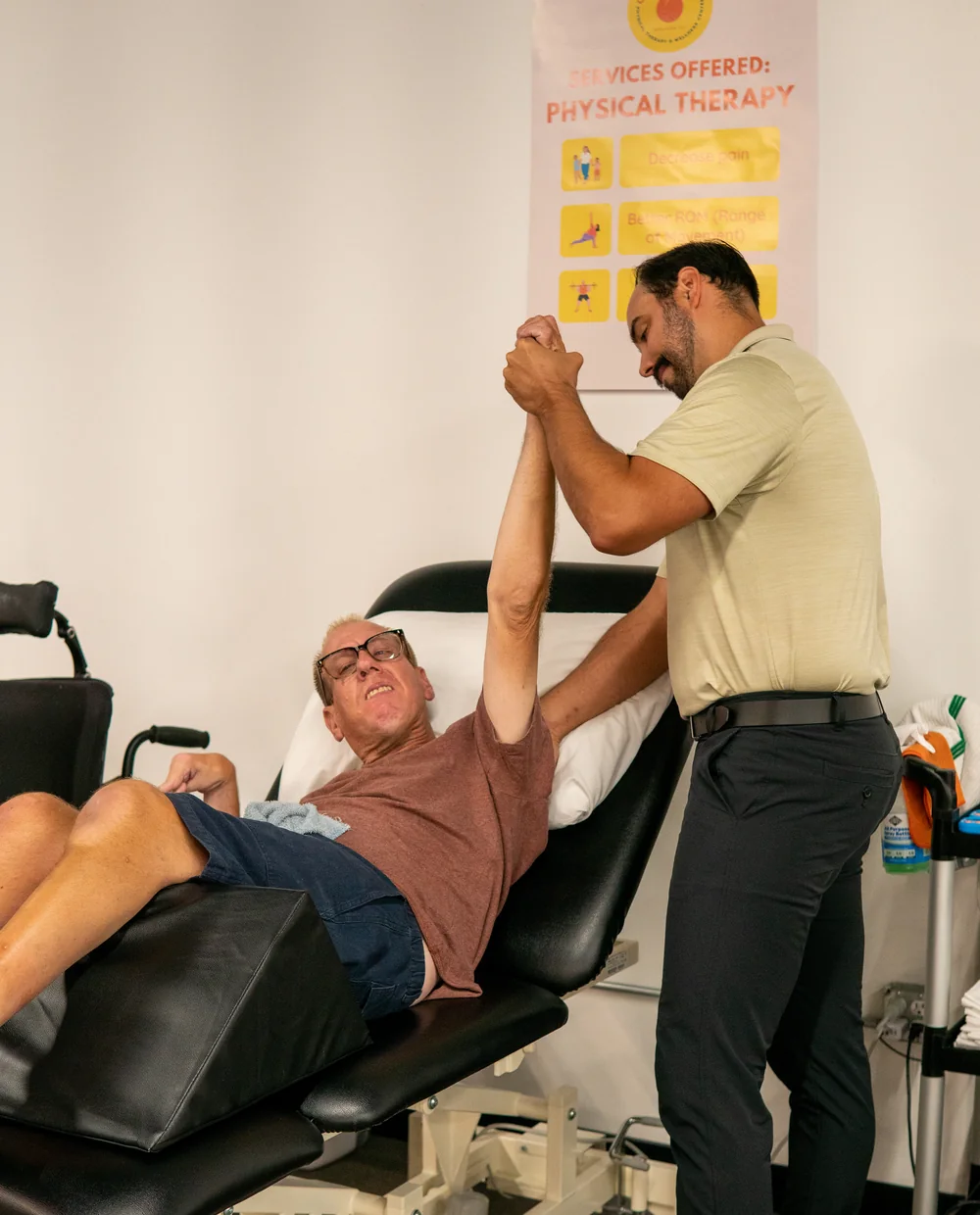
How physical therapy in Redlands helps.
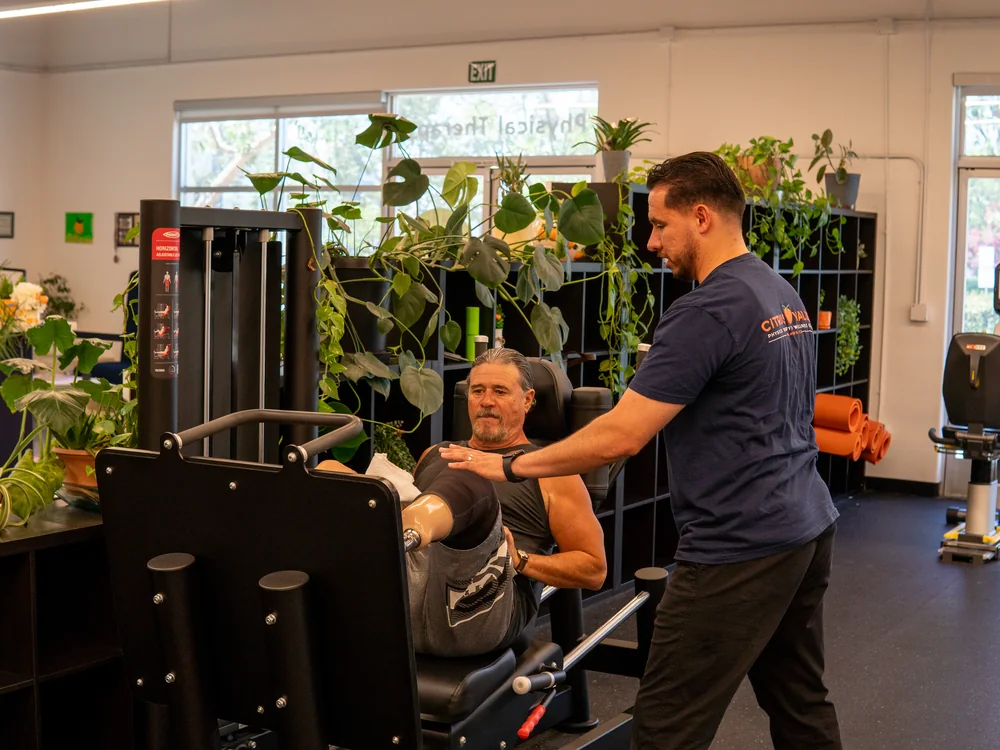
Gross motor work is task practice with the difficulty set correctly, and that is hard to get right alone. Too easy and nothing changes. Too hard and you rehearse the compensation instead of the skill. Your evaluation is about an hour, one on one with a doctor of physical therapy, and it measures the tasks you care about: how you rise from a chair, how far and how steadily you walk, how you manage a step. The plan then follows four phases. Pain: settle anything painful enough to block practice. Prime: restore the range and control the task needs. Perform: build strength and repetitions until the task holds under real conditions. Prevent: keep it, with a program you can run at home or on the gym floor.
What to expect from your plan of care.
Measuring where you actually are
The first visit is about an hour with a doctor of physical therapy. We go through your history and any diagnosis you already have, then test function directly: sit to stand repetitions, walking speed and distance, balance with and without vision, strength side to side, and how much assistance a task really needs. We ask what you want back, specifically, because a plan aimed at getting up from the living room couch looks different from one aimed at a full flight of stairs.
Training the task, not just the muscle
Sessions combine strength work with repeated practice of the movement itself, broken into the piece that is failing and progressed as it improves. If tightness or a painful joint is blocking the pattern, hands on work clears the way first. You get a home program built to be done in a normal room with what you already own. Your therapist re-tests your measurements every visit, so progress is measured rather than guessed at.
Making it durable
Gains in gross motor skill fade if the work stops entirely, so the last phase is about the handoff. We take the program up to a level you can maintain, rehearse it in the setting where you will do it, and give the people helping you at home clear instructions. Most plans of care run 2 to 3 visits a week for 4 to 6 weeks, and where a condition is ongoing we plan around it rather than pretend there is a finish line.
Great place!! Staff very friendly! Trainers are knowledgeable will answer any/ all questions you may have regarding ur therapy! I'd definitely recommend citrus valley to anyone in need of therapy.
Movement problems rarely travel alone.
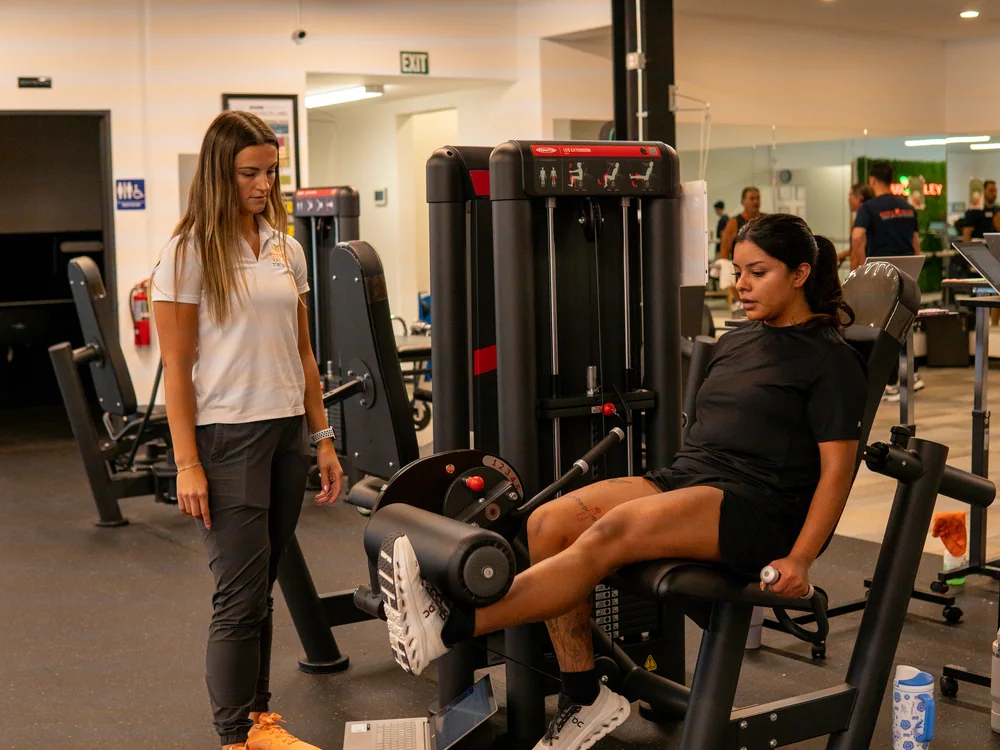
Cerebral Palsy
Tone and coordination patterns set early, but the tightness and weakness that stack on top of them stay trainable.
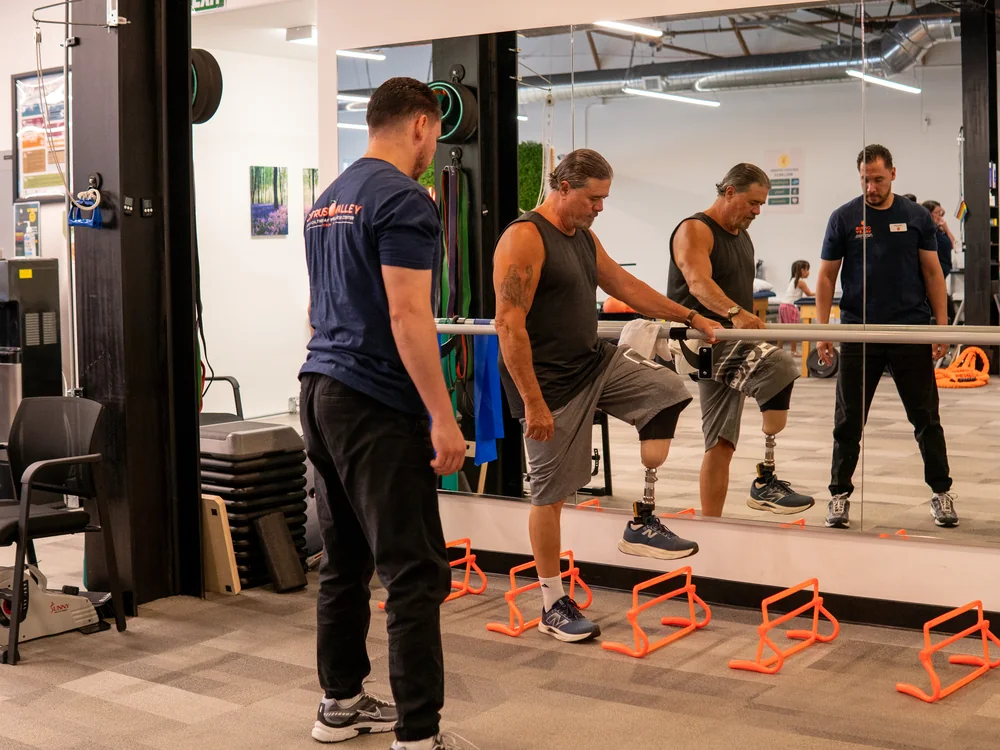
Balance & Gait Disorders
When the big movements feel unsafe, balance is often the limiter rather than leg strength. It is tested separately.
Neurological Disorders
When the signal to the muscle is the problem, the training changes. Repetition of the real task is what rebuilds it.
Ready when you are.
All fields are required.