Neurological Disorders Treatment in Redlands
A stroke, a diagnosis, an injury. Something changed the wiring, and the body on the other end of it moves differently now. Rehab does not undo the event. It rebuilds what the nervous system can still be taught to do, which is usually more than anyone told you.
What Causes Neurological Movement Problems?
Most people land on this page for one of two reasons. Somebody in the family got a diagnosis and the next specialist appointment is weeks out, or you came home from the hospital with a folder and no clear idea what happens next. Neurological conditions differ enormously in cause and in course, but they produce a short and shared list of movement problems: weakness distributed unevenly, balance that no longer runs quietly in the background, coordination and timing that suddenly have to be thought about, and fitness sliding away because moving got harder. Those are the problems physical therapy works on. Below is where they come from, with links to the pages that go deeper.
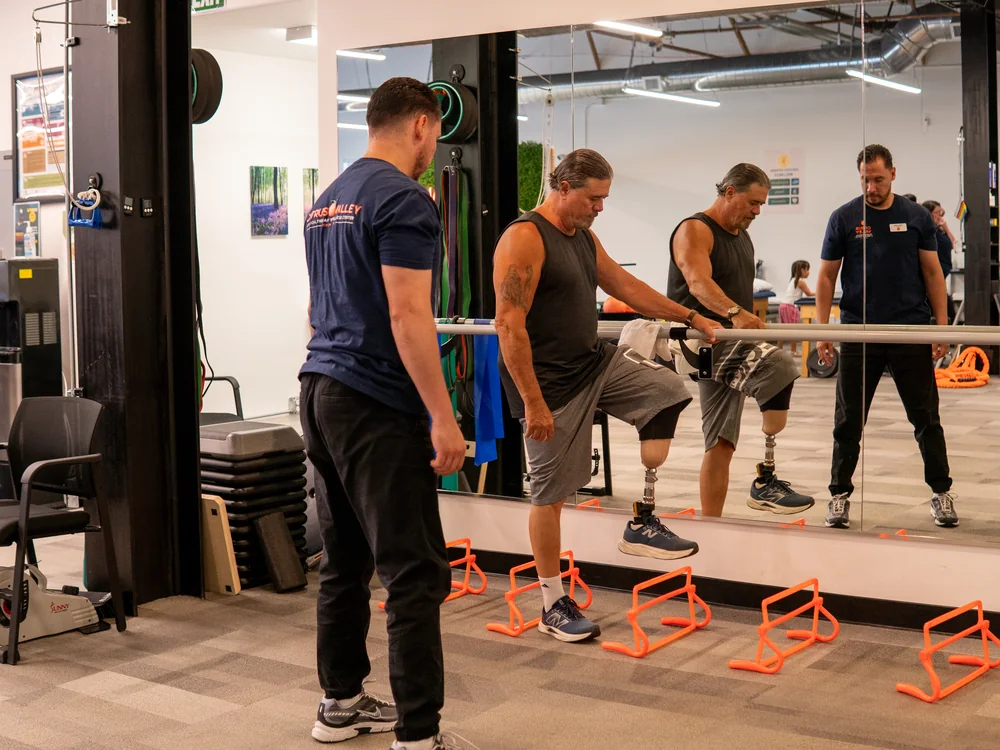
When blood flow to part of the brain stops, the tissue it fed stops sending clear instructions to the body. What you get depends entirely on which region was affected: weakness down one side, a hand that will not open, a foot that catches, speech and swallowing changes. The undamaged brain can take over a great deal of that work, but only with specific, repeated, difficult practice. Our stroke page covers the rehab in detail.
These conditions change over time, which changes the job. The aim is not to reverse the disease, it is to keep function, strength and independence ahead of the curve for as long as possible, and to catch a decline while it is still small. Both have well studied exercise approaches behind them. See multiple sclerosis and Parkinson's.
When the injury happened before or around birth, movement developed around it rather than being lost. Tone, coordination and joint alignment all sit somewhere different from typical, and needs shift again at every growth spurt and every life stage, adults included. Our cerebral palsy page covers how that work runs here.
Not every neurological problem sits in the brain or spinal cord. Damage to the nerves running out to your hands and feet takes away sensation, strength or both, and the loss of sensation is often the bigger risk, because feet that cannot report back make balance a guessing game. See neuropathy.
Balance depends on your eyes, your inner ear and the position sense coming from your joints and feet. Neurological conditions frequently knock out one of those three, and the two that remain have to be trained to carry the load. That is trainable, and it is measurable. See dizziness and vertigo.
This one is not the diagnosis, it is what grows on top of it. When a limb is difficult to use, you stop using it, and the nervous system quietly reassigns the territory. Strength, capacity and confidence fall alongside it, and the resulting weakness gets mistaken for the condition progressing. Separating those two is one of the first things an evaluation does.
How Physical Therapy in Redlands Helps
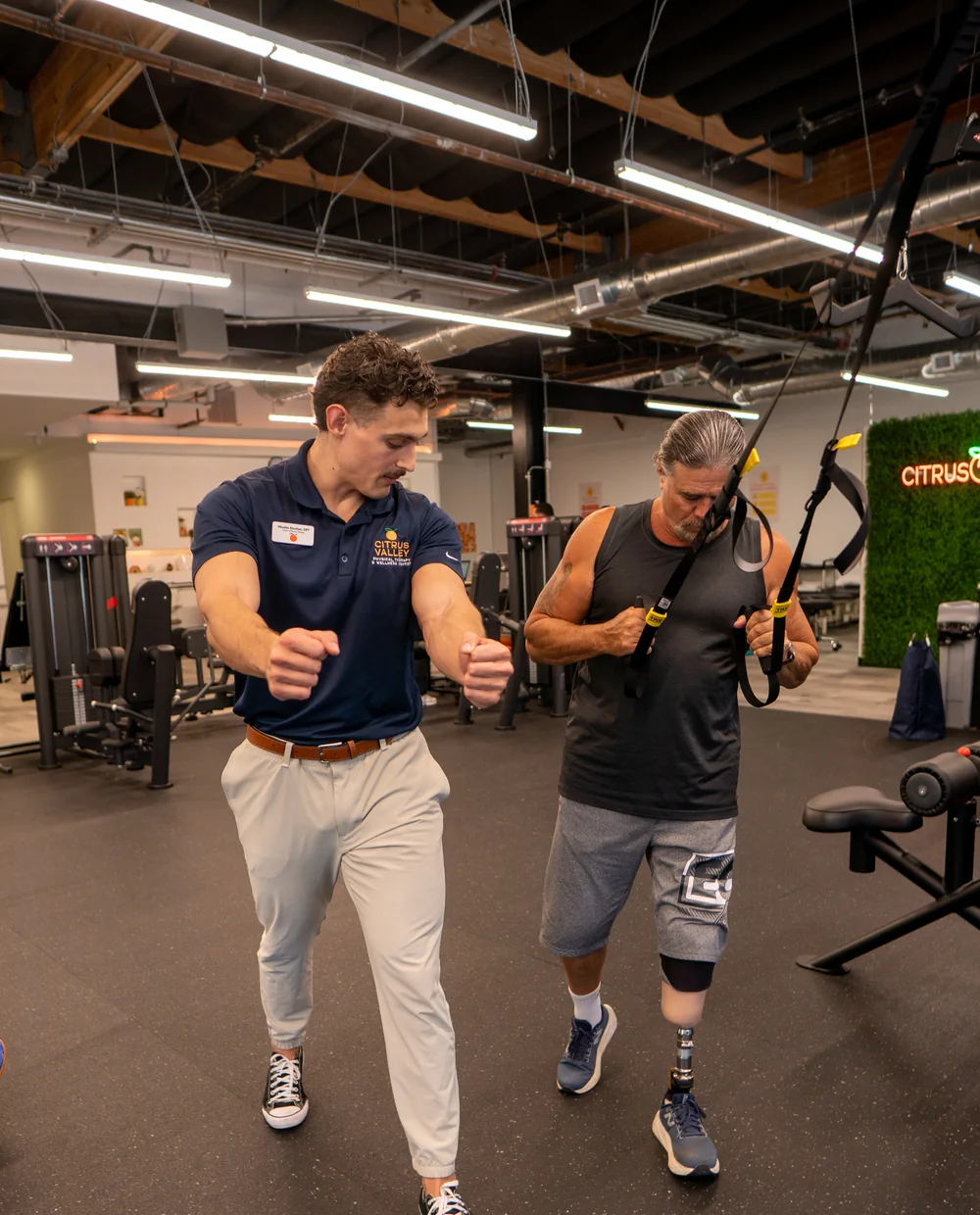
Neurological rehab is skill practice, not just exercise. The nervous system reorganizes around what it is asked to do repeatedly, at the edge of what it can currently manage, with clear feedback, so the work is specific and it is genuinely hard. A doctor of physical therapy measures walking speed and pattern, balance under different conditions, tone, strength and endurance, then builds practice around the tasks you actually need back. Sessions are one on one and run 30 to 60 minutes, which matters here, because this work does not happen in a room where one therapist is watching six people at once.
What to Expect When You Start
The evaluation
Your first visit runs about an hour, one on one with a doctor of physical therapy. Bring your diagnosis, your medication list, any hospital or specialist notes you have, and whoever helps you at home, because they are part of the plan. The exam covers walking, balance, tone, strength, sensation and endurance, plus the specific tasks that have become difficult. In California you can begin physical therapy without a physician referral for up to 45 days or 12 visits, whichever comes first, and we verify your benefits before you commit to anything.
Your plan, in four phases
Every plan here moves through Pain, Prime, Perform, Prevent. Pain settles whatever is limiting you, whether that is spasticity, a painful shoulder or dizziness on standing. Prime restores the range and control needed before a movement can be practised properly. Perform is the repetition: the real task, at real difficulty, enough times to change something. Prevent keeps the gains with a home program your household can genuinely run.
Measured, not guessed at
Most plans of care run 2 to 3 visits a week for 4 to 6 weeks, and many patients notice a change in the first week or two. Neurological recovery rarely follows a straight line, which is exactly why the measurements matter. Your therapist re-tests the same items at every visit, so a difficult week reads as a difficult week rather than as failure, and the plan is adjusted on evidence.
My experience at Citrus Valley Physical Therapy was most gratifying. My pain is cirrently about a 3 out of 10. When I first arrived my pain level was a 8 out of 10.
Go Deeper on Your Diagnosis
Stroke
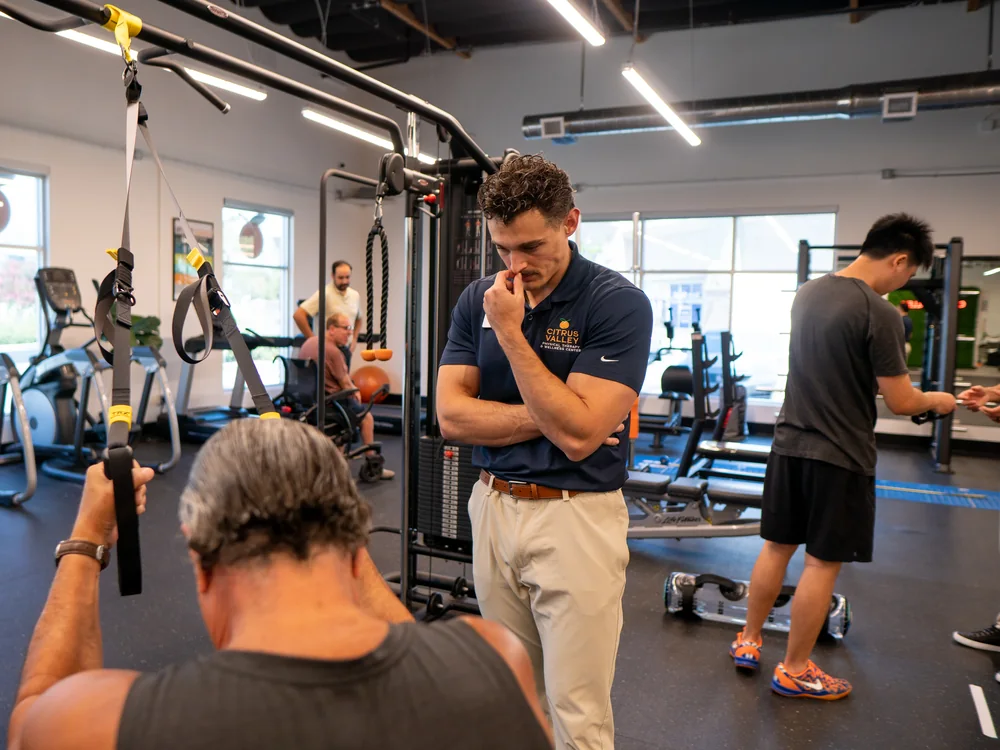
Rebuilding the arm, the leg and the walking pattern through the specific, repeated practice the brain responds to.

Parkinson's
Big, deliberate movement, gait work and balance training to stay ahead of the shrinking that comes with it.
Multiple Sclerosis
Strength, walking efficiency and balance, paced around fatigue and around the heat instead of fighting both.
Ready when you are.
All fields are required.