Carpal Tunnel Syndrome Treatment in Redlands
It wakes you at two in the morning and you hang the hand off the side of the bed and shake it until it comes back. Lately you have been dropping the coffee cup. That is a nerve under pressure, and the place it is under pressure is not always the wrist.
What causes carpal tunnel syndrome?
The carpal tunnel is a narrow passage at the base of the palm, walled by wrist bones and roofed by a stiff band of ligament. Nine tendons and one nerve share it, and the roof does not stretch. Anything that raises pressure inside that space, or tugs on the median nerve further up its path, produces the same numbness and clumsiness on the thumb side of the hand. So the question is not whether you have carpal tunnel syndrome. It is where along the line the nerve is getting squeezed.
When the tendons sharing the tunnel swell, or the lining around them thickens, pressure in that fixed space climbs and the nerve is the softest thing in there. Early on the nerve simply complains: pins and needles, a hand that feels puffy even when it is not. Left alone long enough the signal itself degrades, numbness turns constant, and the muscle at the base of the thumb starts to shrink. That is the point where we stop waiting and get a physician involved.
Pressure inside the tunnel rises sharply when the wrist is bent hard either way, and rises again when you grip. Stack those together for hours, day after day, and the tissue never gets a chance to settle: assembly work, vibrating tools, hairdressing, a mouse set too far forward. The cause is rarely one dramatic injury. It is total volume, which is the part we can usually change without changing your job.
There is a reason this wakes people up. Most of us curl the wrists in our sleep, and a bent wrist held for hours squeezes the nerve with no muscle activity to pump swelling out. That is why the hand is numb at 2am and better once you are up and moving. Keeping the wrist neutral overnight, usually with a simple brace, is one of the highest value changes available.
Anything that increases fluid retention or changes how nerve tissue tolerates pressure raises the odds. Pregnancy is the clearest example, and symptoms often settle after delivery. An underactive thyroid, diabetes, and inflammatory arthritis shift the baseline too. That is a medical picture worth having your physician look at, and a reason to be patient with therapy.
The median nerve begins at the neck and travels through the shoulder, past the elbow, and down the forearm before it ever reaches the wrist. It can be irritated at any point along that route, and irritation in two places at once makes the hand far more sensitive than either would alone. This is why a real evaluation screens the neck and shoulder.
A healthy nerve slides several millimetres as you straighten your elbow and extend your wrist. When surrounding tissue thickens or scars, that glide is lost and the nerve gets tugged rather than moved. Grip weakens, the forearm feels tight, and symptoms spread up the arm. Restoring glide with graded nerve and tendon work is central to treatment, and it is easy to overdo, so it belongs under supervision rather than off a handout.
How physical therapy in Redlands helps.
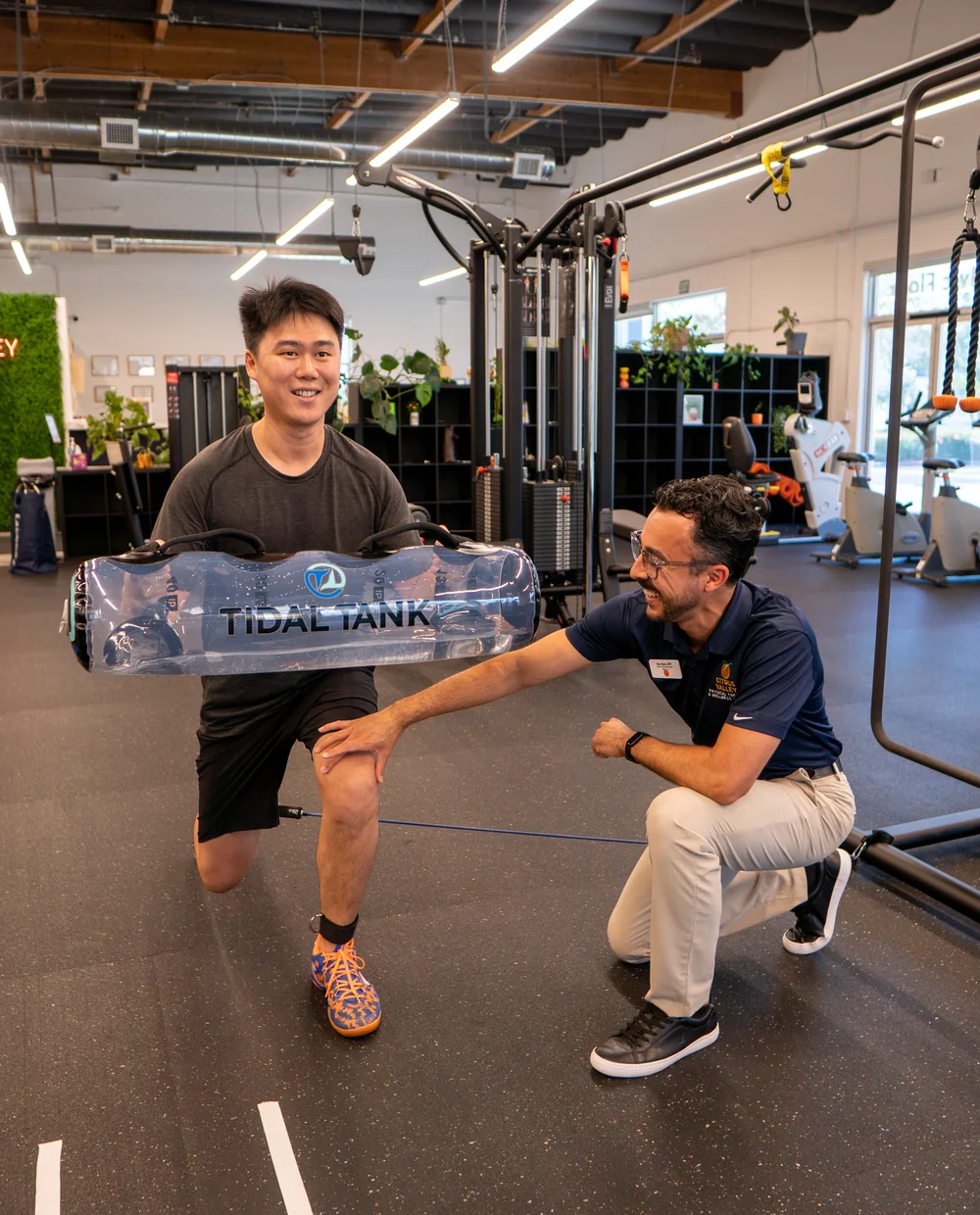
For mild and moderate carpal tunnel, conservative care is a sensible first move. Your physical therapist tests where the nerve is irritated along its whole path, measures grip and pinch so there is a number to track, and screens the neck and shoulder before assuming the wrist is the culprit. Treatment then works on three fronts: taking pressure off the nerve through positioning and night splinting, restoring glide with graded nerve and tendon work plus hands on treatment through the forearm, and rebuilding grip and shoulder strength so the wrist stops carrying everything. We also change the specific tasks that set it off, because good treatment loses to eight hours a day of the position that caused it. If symptoms are severe or the thumb muscle is already wasting, we say so plainly and coordinate with your physician.
What to expect from your recovery.
Find where the nerve is actually pinched
The first visit is about an hour, one on one with a doctor of physical therapy. We test sensation and strength, run the tests that provoke the median nerve at the wrist, elbow, and neck, and measure grip so progress is a number rather than an impression. You leave knowing how irritable the nerve is and whether physical therapy is the right first step. In California you can begin without a physician referral for up to 45 days or 12 visits, and we check your insurance before that visit.
Take the pressure off, then get it moving
The first job is quieting the nerve down: night positioning, changes to the tasks that keep flaring it, hands on work through the forearm and wrist, and nerve glides dosed carefully, since too much too soon makes a sensitive nerve angrier. Most plans run 2 to 3 visits a week for 4 to 6 weeks in 30 to 60 minute sessions. Many patients notice the night symptoms easing first, often inside the first week or two.
Rebuild grip and change the load
Once the nerve tolerates movement, we build strength through the hand, forearm, and shoulder so the wrist stops absorbing everything, and we rehearse your actual tasks: the tool, the keyboard, the weight you carry in from the car. Grip and sensation get re-tested so you can see the change. You leave with a home program and a plan for the habits that would otherwise bring it straight back.
Very professional, but friendly employees. Calm environment, not chaotic like so many other PT places. Will always come here if need more PT.
Pain rarely travels alone.
Elbow, Wrist & Hand Pain
Tendon and joint pain in the same arm often travels with the nerve symptoms. We treat the chain.
Neck Pain
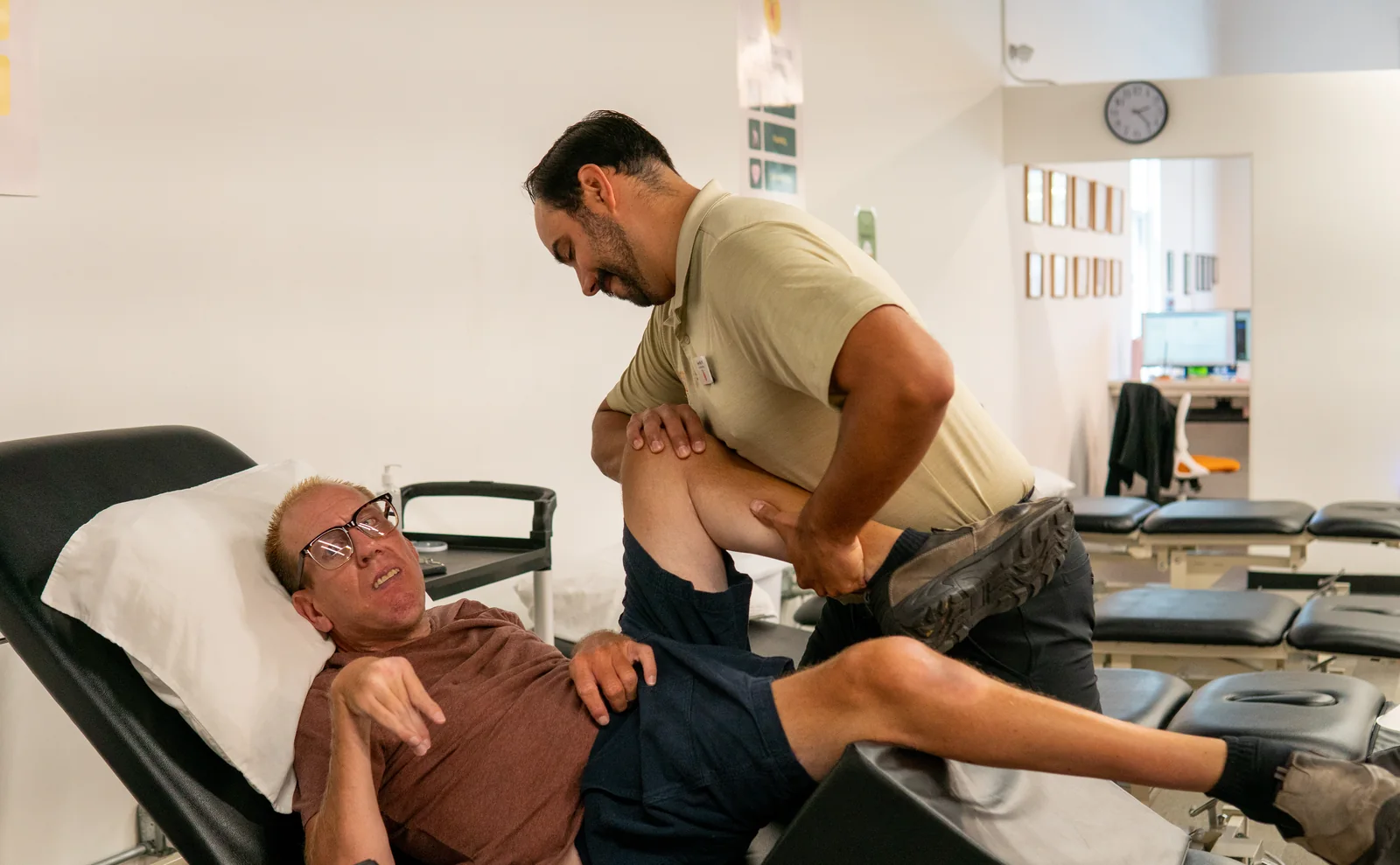
The median nerve starts at the neck. Hand symptoms that will not settle often begin higher up.
Neuropathy
Numbness and burning in both hands or feet points somewhere other than the carpal tunnel.
Ready when you are.
All fields are required.